Understanding light is fundamental to everything from designing energy-efficient homes to engineering high-performance commercial lighting systems. Among the various photometric measurements used in lighting engineering, luminous flux stands out as luminous flux a key parameter in lighting science. It serves as the foundation for evaluating perceived light output, optimizing lighting design, and ensuring the right illumination for human visual comfort.
This comprehensive article explores the science behind luminous flux, its role in lighting performance, how it is measured, and why it remains one of the most important metrics in modern illumination technologies. We will also discuss the distinctions between luminous flux and related lighting parameters, practical applications, real-world examples, and current industry standards that rely heavily on accurate flux measurements.
What Is Luminous Flux?
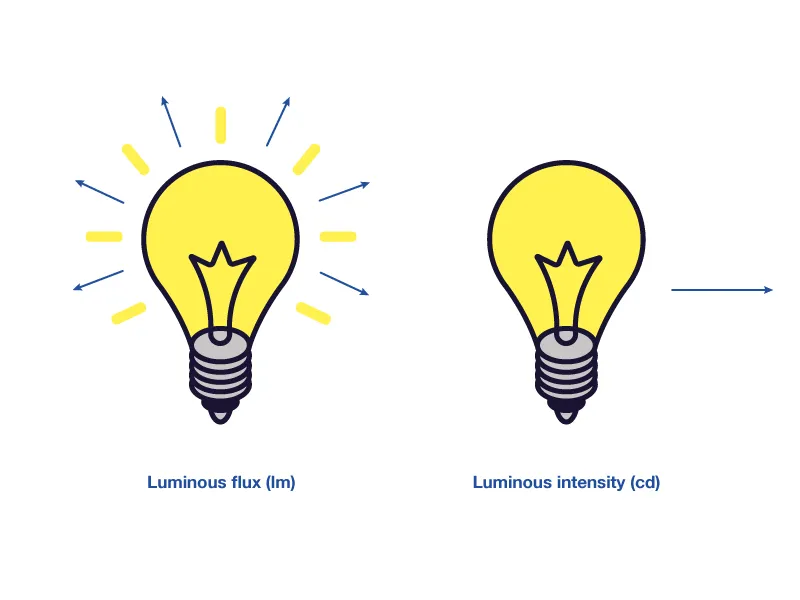
Luminous flux is defined as the total amount of perceived visible light emitted by a source per unit time. It is a photometric quantity measured in lumens (lm), representing the rate at which light energy in the visible spectrum is emitted, transmitted, or received, weighted by the sensitivity of the human eye.
In simple terms, luminous flux tells us how much visible light a lamp or LED produces. It does not measure energy output alone; rather, it focuses on usable light — light that humans can actually see.
The most important thing to understand is that luminous flux incorporates the luminosity function, a standardized curve that reflects the average human eye’s sensitivity to different wavelengths. The human eye is most sensitive to wavelengths around 555 nm (green-yellow light). As such, light at that wavelength contributes more to luminous flux than light in the deep red or violet spectrum.
This weighting makes luminous flux central to lighting applications designed for human environments, from offices to hospitals to stadiums.
Why Luminous Flux Matters: The Heart of Photometry
Luminous flux is widely considered luminous flux a key parameter in lighting science because it directly links physical light production to human visual perception. Here are the core reasons why it plays such a crucial role:
1. It Describes Perceived Brightness Output
Even if two light sources emit the same amount of radiant energy (measured physically as radiant flux), they may produce different luminous flux values because the human eye perceives some wavelengths more strongly than others. Luminous flux accounts for this perceptual difference.
2. It Enables Cross-Technology Comparison
Luminous flux allows engineers, designers, and consumers to compare the brightness of different lighting technologies:
- LEDs
- Incandescent lamps
- Fluorescent lamps
- High-intensity discharge lamps
- Lasers (in some cases)
By expressing light output in lumens, luminous flux becomes a universal performance metric.
3. It Supports Lighting Quality and Human Well-Being
Since luminous flux is tailored to human visual response, it directly influences:
- visual comfort
- workplace productivity
- safety
- mood and psychological well-being
Lighting that does not consider luminous flux often leads to poorly illuminated spaces, glare issues, or insufficient brightness for visual tasks.
4. It Determines Lighting Efficiency Metrics
Key efficiency metrics rely on luminous flux, including:
- Luminous efficacy (lumens per watt)
- Luminaire efficiency
- Lighting power density (LPD) in building standards
A lamp that consumes little power but produces high luminous flux is considered efficient.
5. It Governs Industry Standards and Regulations
International lighting bodies like CIE, ANSI, and ASTM base many of their specifications, performance ratings, and test methodologies on luminous flux measurements.
The Science Behind Luminous Flux
To understand luminous flux deeply, we must examine the scientific principles that shape it.
The Relationship Between Radiant Flux and Luminous Flux
Radiant flux measures total electromagnetic energy emitted per second (in watts). Luminous flux translates radiant energy into perceptually relevant light by applying a weighting function: Φv=683∫380780Φe(λ)V(λ)dλ\Phi_v = 683 \int_{380}^{780} \Phi_e(\lambda) V(\lambda) d\lambdaΦv=683∫380780Φe(λ)V(λ)dλ
Where:
- Φv\Phi_vΦv = luminous flux (lumens)
- Φe(λ)\Phi_e(\lambda)Φe(λ) = radiant power at wavelength λ\lambdaλ
- V(λ)V(\lambda)V(λ) = the luminosity function
- 683 lm/W is the luminous efficacy of monochromatic light at 555 nm
This formula highlights that luminous flux is not simply the physical energy output but a psychophysically weighted measurement.
The Luminosity Function
The CIE standard luminosity function simulates human photopic (daylight) vision. A separate function exists for scotopic (low-light) vision.
This distinction matters because a lamp optimized for scotopic vision (such as certain blue-rich LEDs) may have low photopic luminous flux but still appear bright at night.
Influence of Spectral Power Distribution (SPD)
Every light source has a unique spectral signature or SPD. Because flux depends on SPD, two lamps with equal wattage may produce drastically different luminous flux levels.
How Luminous Flux Is Measured
Luminous flux measurement requires specialized tools to ensure accurate results.
1. Integrating Sphere
The gold standard for luminous flux measurement, an integrating sphere:
- captures all emitted light
- accounts for reflection and scattering
- provides total luminous flux in lumens
LED manufacturers rely heavily on integrating sphere measurements.
2. Goniophotometer
A goniophotometer measures light intensity from different angles and integrates the data to calculate total luminous flux. It is essential for luminaires with directional beams, such as spotlights and floodlights.
3. Calibration Standards
Measurement devices must be regularly calibrated using reference lamps defined by international standards.
Luminous Flux in LED Technology
LEDs have revolutionized lighting, and luminous flux is central to evaluating their performance.
Higher Efficacy
Modern LEDs can achieve more than 180 lm/W, far surpassing traditional lighting. However, achieving high luminous flux is not the only goal — maintaining flux stability over time is equally important.
Flux Depreciation
LED luminous flux decreases gradually due to:
- thermal stress
- material degradation
- phosphor wear
This depreciation is represented by the L70 or L90 ratings (the time until flux drops to 70% or 90% of original output).
Color Temperature and Flux
Cooler color temperatures (5000K–6500K) often produce higher luminous flux because they emit more energy around the eye’s peak sensitivity range. But warmer LEDs (2700K–3000K) may offer better comfort and ambience despite a slightly lower flux.
Differences Between Luminous Flux and Other Key Lighting Metrics
Because lighting involves multiple interrelated parameters, it’s important to differentiate luminous flux from others.
Luminous Flux vs. Luminous Intensity
- Luminous flux = total visible light output
- Luminous intensity = light output in a specific direction (candela)
Luminous Flux vs. Illuminance
- Luminous flux = total output of the source
- Illuminance = incident light on a surface (lux)
Luminous Flux vs. Luminance
- Luminance measures the perceived brightness of a surface emitting or reflecting light.
Luminous Flux vs. Radiant Flux
- Radiant flux: physical energy
- Luminous flux: human-perceived light
Practical Applications of Luminous Flux
Because luminous flux is deeply tied to perception and human use, it plays a defining role in many real-world applications.
1. Architectural and Interior Lighting Design
Designers choose luminaires with appropriate flux to ensure:
- balanced ambient lighting
- adequate task lighting
- proper mood illumination
2. Outdoor and Street Lighting
Municipalities rely on luminous flux values to:
- reduce glare
- improve pedestrian visibility
- meet safety standards
- minimize energy consumption
3. Automotive Lighting
Headlamp performance, daytime running lights, brake lights, and cabin illumination use flux values for safety certification.
4. Industrial and Commercial Lighting
Warehouses, factories, and retail locations require precise flux calculations to comply with OSHA and other workplace regulations.
5. Smart Lighting Systems
IoT-enabled luminaires dynamically adjust luminous flux to:
- conserve energy
- improve comfort
- support circadian rhythm lighting
Luminous Efficacy: A Metric Derived from Luminous Flux
Luminous efficacy expresses how efficiently a light source converts electrical power into luminous flux: Efficacy=LumensWatts\text{Efficacy} = \frac{\text{Lumens}}{\text{Watts}}Efficacy=WattsLumens
This metric is an essential indicator of performance. For example:
- Incandescent lamps: ~10–15 lm/W
- Fluorescent lamps: ~50–100 lm/W
- High-quality LEDs: 120–180 lm/W
A high luminous flux value paired with low power consumption translates into higher efficacy, making luminous flux vital in energy-efficiency ratings.
How Luminous Flux Influences Human Factors and Health
Light significantly affects human physiology. Since luminous flux determines brightness, it affects:
Circadian rhythms
Lighting that provides adequate flux during daytime hours supports biological alertness.
Visual acuity
Flux directly influences:
- contrast visibility
- reading ability
- task performance
Emotional well-being
Spaces that are poorly lit or excessively bright disrupt comfort. Balanced luminous flux helps maintain psychological harmony.
Common Misconceptions About Luminous Flux
1. “More lumens always means better lighting.”
Not true. Quality of light depends on distribution, color rendering, glare control, and spatial design.
2. “Wattage equals brightness.”
This was true for incandescent bulbs but not modern LEDs. Luminous flux is the correct measure.
3. “Cool light always produces higher luminous flux.”
While generally accurate, design goals often prioritize comfort over maximum flux.
Current Trends That Depend on Luminous Flux
The lighting industry is evolving rapidly, and luminous flux is central to innovations such as:
Human-centric lighting (HCL)
Systems provide variable luminous flux levels to mimic natural daylight.
High-efficacy LED development
Manufacturers focus on increasing lumens per watt while maintaining consistent spectral qualities.
Sustainable building design
Certifications like LEED and WELL rely on flux-based calculations to ensure energy efficiency and occupant comfort.
Conclusion: Why Luminous Flux Remains Essential
From residential LED lamps to advanced architectural lighting systems, luminous flux, a key parameter in lighting science, remains one of the most important metrics for evaluating and optimizing visual environments. It connects the physical science of light production with human perception, comfort, and well-being.
Understanding luminous flux allows lighting designers, engineers, facility managers, and consumers to make informed decisions that balance brightness, efficiency, aesthetics, and safety. As lighting technologies continue to evolve, luminous flux will remain a core element in performance standards, energy regulation, and the pursuit of smarter, healthier illuminated spaces.