The Role of dimming Technology in LED lighting
With the widespread application of LED lighting technology, dimming technology has become a crucial means to enhance lighting quality, improve energy-saving effects, and improve user experience.
Dimming not only adjusts the light intensity according to environmental requirements but also extends the lifespan of lamps and reduces energy consumption.
PWM (Pulse Width Modulation) dimming, a mature and efficient dimming method, is widely used in various LED lamps and has become a key technology for achieving high-quality lighting.
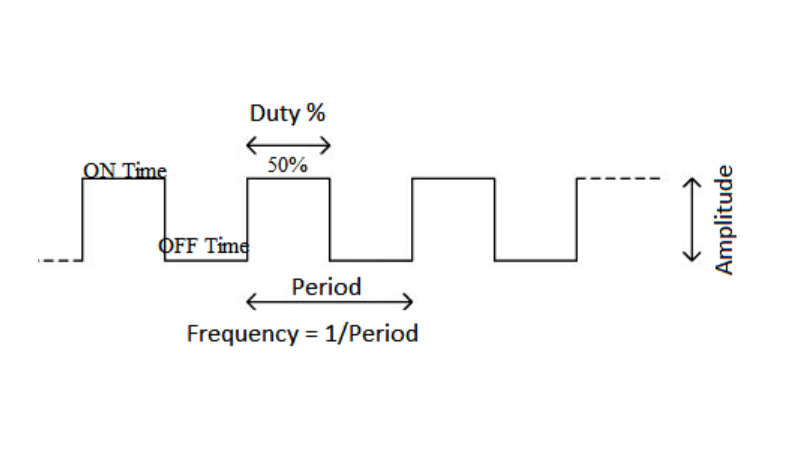
The basic principle of PWM dimming
PWM dimming is a technology that achieves brightness adjustment by controlling the conduction time of the current through high-speed switches.
Specifically, the PWM dimmer rapidly switches the power switch of the LED at a fixed frequency, adjusting the time ratio of “on” to “off” (i.e., duty cycle) within one cycle. When the switch is on for a long time, the LED brightness is relatively high.
Conversely, when the operating time is short, the brightness of the LED decreases.
Due to the fast switching speed that is imperceptible to the human eye, it visually presents a stable and continuous change in brightness.
The advantages of PWM dimming in LED lamps
PWM dimming has several significant advantages:
High efficiency and energy saving: Brightness control is achieved by adjusting the conduction time of the current, with low energy loss and improved overall energy efficiency.
Flicker-free design: High-frequency switches ensure stable lighting, avoiding the flicker problems that may occur with traditional dimming methods and protecting eye health.
Constant current driver compatibility: It works well with a constant current power supply to ensure the stable operation of LED beads and extend their service life.
Good anti-interference ability: High-speed switching and digital control reduce electromagnetic interference, adapting to complex power grid environments.
Precise brightness control: The duty cycle adjustment range is wide, capable of achieving a smooth dimming effect from completely off to fully on.
A comparison of PWM dimming with other dimming methods
Compared with analog dimming (which achieves brightness adjustment by changing the current size), PWM dimming has more advantages in terms of efficiency and stability.
Analog dimming is prone to causing unstable LED light color and accelerated light attenuation due to current changes, while PWM dimming maintains a constant current, resulting in purer light color and longer lifespan.
Meanwhile, the flicker-free feature of PWM dimming makes it more suitable for application scenarios with high requirements for visual health.
The application scenarios and actual effects of PWM dimming
PWM dimming is widely used in various indoor and outdoor LED lamps, such as downlights, panel lights, track lights, fish collection lights, etc. In home lighting, users can freely adjust the light intensity through dimmers to create different atmospheres.
In commercial lighting, PWM dimming helps achieve energy conservation, emission reduction and visual comfort. In special fields, such as fishery LED fishing lamps, precise dimming enhances lighting efficiency and catch rates.
Practical application has proved that PWM dimming effectively enhances the performance of lamps and user satisfaction.
The future development trend of PWM dimming technology
With the rapid development of smart lighting and Internet of Things (iot) technologies, PWM dimming is moving towards higher frequencies and greater intelligence.
Future PWM dimmers will integrate more intelligent control functions, such as automatic dimming in conjunction with sensors, remote wireless control, and multi-protocol compatibility.
Meanwhile, the advancement of chip technology will make PWM dimming more energy-efficient and stable, meeting more complex and diverse lighting requirements.
Summary: PWM dimming facilitates the upgrade of smart lighting
As the mainstream technology for dimming LED lamps, PWM dimming, with its high efficiency, stability and precision, is widely applied in various lighting scenarios.
It not only enhances the performance and service life of LED lamps but also brings users a more comfortable and energy-efficient lighting experience.
Looking ahead, PWM dimming will play a greater role in the field of smart lighting, driving the lighting industry to a new height of intelligence and green energy conservation.