UVA LED Lighting has rapidly become a cornerstone technology in modern manufacturing, healthcare, and scientific research. With its unique wavelength range and precise control, it offers unprecedented efficiency in specialized applications, from industrial curing to medical diagnostics. However, understanding UVA LED Lighting goes beyond its technical advantages—it’s equally important to examine health impacts and protective measures.
In this comprehensive guide, we’ll explore UVA LED Applications, the science behind UVA LED Wavelength, the growing role of UVA LED Curing in industry, and how to stay safe while working with this powerful light source.
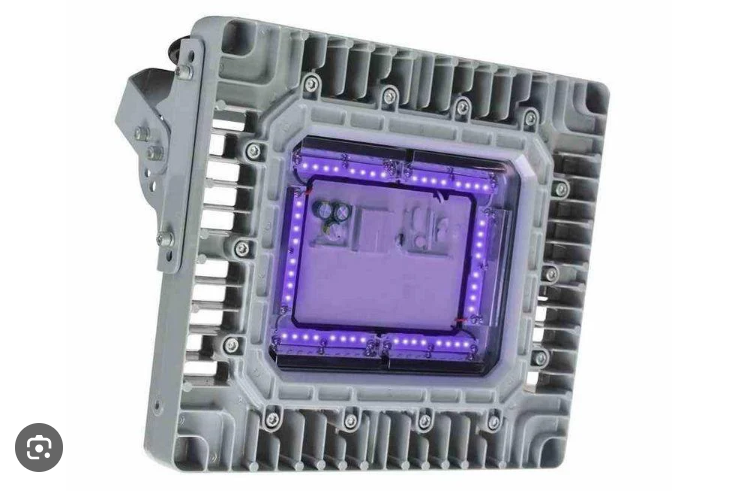
Understanding UVA Light and LED Technology
Before diving into the specifics of UVA LED Lighting, it’s important to understand the science behind it.
UVA Light refers to long-wave ultraviolet radiation, ranging approximately from 315 to 400 nanometers in wavelength. This range is closest to visible light and is less energetic than UVB or UVC, but it still carries biological effects.
LED Technology uses semiconductors to emit light when an electric current passes through them. By engineering specific materials, LEDs can be designed to emit at targeted wavelengths—including UVA.
The UVA LED Wavelength
The UVA LED Wavelength is crucial because it determines the light’s effectiveness for various purposes. Typical UVA LEDs operate at key wavelength bands such as 365 nm, 385 nm, 395 nm, and 405 nm.
- 365 nm – Often used for precision curing and fluorescence detection.
- 385 nm – Common in industrial coatings and printing.
- 395-405 nm – More energy-efficient and used in larger-scale curing applications.
Each wavelength has trade-offs in efficiency, penetration depth, and material compatibility.
Major UVA LED Applications
UVA LED Applications span numerous industries, thanks to their ability to provide controlled UV output without the drawbacks of mercury lamps.
Industrial Manufacturing and Curing
One of the most significant uses is UVA LED Curing. This process involves using UVA light to harden adhesives, inks, coatings, and polymers rapidly. Advantages include:
- Faster processing times compared to traditional curing methods
- Reduced heat damage to sensitive components
- Lower energy consumption
- Mercury-free operation, making it environmentally friendly
Industries such as electronics, automotive, and packaging rely heavily on UVA LED Curing for production efficiency.
Forensic and Security Applications
Law enforcement agencies use UVA LED Lighting to detect bodily fluids, latent fingerprints, and counterfeit currency. The fluorescence effect under UVA exposure makes hidden details visible, aiding investigations.
Medical and Scientific Research
In healthcare, UVA LED Applications include phototherapy, sterilization of medical tools (in combination with other UV ranges), and fluorescence microscopy. Researchers also use UVA LEDs for controlled plant growth studies.
Entertainment and Aesthetics
From blacklight effects in theaters to art installations, UVA LED Lighting creates visually striking atmospheres. It’s also common in aquarium lighting to simulate natural sunlight conditions.
Health Impacts of UVA LED Lighting
While UVA LED Lighting is less harmful than shorter-wavelength UVB or UVC, it’s not without risks.
Potential Risks
- Skin Aging: Prolonged UVA exposure accelerates skin aging by damaging collagen and elastin fibers.
- Eye Damage: UVA penetrates deep into the eye and may contribute to cataracts and retinal injury over time.
- DNA Damage: Although weaker than UVB, long-term exposure still carries mutagenic potential.
Safe Exposure Guidelines
To minimize risks:
- Use UVA-blocking safety glasses in industrial settings
- Wear protective clothing when working near high-intensity sources
- Limit unnecessary exposure time
- Install shielding around the UVA LED equipment
Protection and Safety Measures
Protective measures for working with UVA LED Lighting include engineering controls, personal protective equipment (PPE), and administrative policies.
- Engineering Controls: Enclosures, filters, and interlock systems to prevent accidental exposure.
- PPE: UV-rated eyewear, gloves, and face shields.
- Training: Educating workers on UVA hazards and correct handling procedures.
For an in-depth guide to PPE, you can explore our related article:
The Future of UVA LED Lighting
Advances in semiconductor materials are making UVA LED Lighting more efficient, longer-lasting, and versatile. We can expect:
- Higher power outputs for faster curing
- Improved spectral precision for scientific applications
- Integration with smart manufacturing systems
For a deeper look at emerging trends, visit our feature:
External References for Further Learning
To validate the information in this article, consult reputable sources:
- International Ultraviolet Association – UVA Light Overview
- American Conference of Governmental Industrial Hygienists – UV Exposure Limits
Conclusion
UVA LED Lighting offers enormous benefits across industries, from precision curing and forensics to advanced medical research. However, its safe use demands an understanding of its UVA LED Wavelength, its diverse UVA LED Applications, and the importance of protective measures.
If you’re planning to integrate UVA LEDs into your workflow—whether for industrial curing, laboratory work, or creative projects—ensure you have the right safety protocols in place.