Why Color Consistency Matters in LED Lighting
In modern lighting design, precision and reliability are more important than ever. Architects, engineers, and end-users expect lighting systems to not only be efficient but also deliver a consistent visual experience. This is where chromaticity matching standard deviation SDCM becomes a crucial concept.
LED lighting technology has transformed the industry by offering energy efficiency, long lifespans, and design flexibility. However, one of the ongoing challenges is color consistency—ensuring that multiple fixtures produce the same shade of white or the same tone of color when installed in the same environment.
If you’ve ever noticed that some “warm white” bulbs look slightly different from others in the same room, you’ve experienced poor chromaticity consistency. To measure and regulate this, lighting standards use a metric called the Standard Deviation of Color Matching (SDCM).
This article will explore the meaning, importance, applications, and best practices around chromaticity matching standard deviation SDCM in LED lighting.
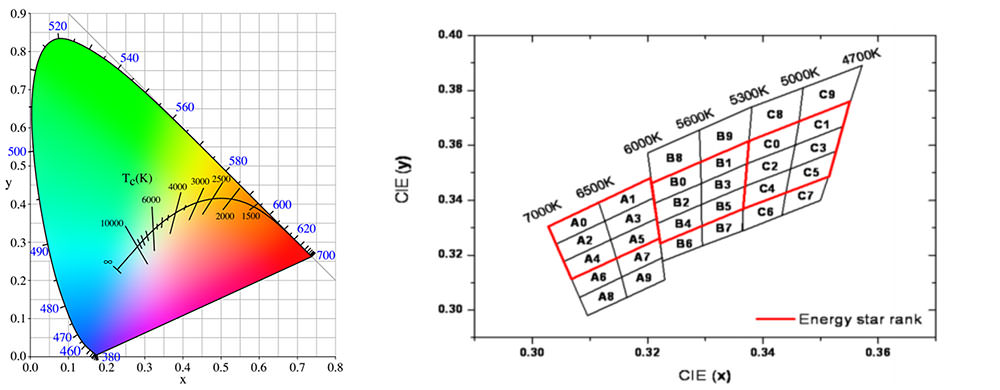
What is Chromaticity Matching Standard Deviation (SDCM)?
Chromaticity Matching Standard Deviation, or SDCM, is a technical metric that indicates how much a light source’s color deviates from a target color on the CIE 1931 chromaticity diagram.
- It is expressed in MacAdam ellipses, developed by the scientist David MacAdam in the 1940s.
- Each ellipse represents a zone where human eyes cannot perceive color differences.
- The smaller the ellipse (measured in steps), the more consistent the color.
In practical terms:
- 1 SDCM = Almost no visible difference in color.
- 3 SDCM = Minimal difference; acceptable in most indoor applications.
- 5+ SDCM = Noticeable difference; often unsuitable for high-end lighting.
Thus, SDCM provides a measurable standard for color tolerance in LED manufacturing and ensures consistency across fixtures.
Why SDCM is Critical for LED Lighting Quality
The importance of chromaticity matching standard deviation SDCM can be explained through three key perspectives:
1. Human Visual Sensitivity
The human eye is extremely sensitive to differences in light color. Even slight variations can be noticed, especially when fixtures are side by side. High SDCM values lead to mismatched colors, creating discomfort and reducing aesthetic appeal.
2. Industry Standardization
Without SDCM, manufacturers would have no uniform measure of chromaticity control. The standard ensures that LEDs meet customer expectations and align with ANSI C78.377, IEC, and EN lighting standards.
3. Application-Specific Needs
Different environments demand different tolerances:
- Museums, galleries, luxury retail → Require ≤3 SDCM for precise color reproduction.
- Office or residential spaces → Typically accept up to 5 SDCM.
- Outdoor or industrial lighting → Higher SDCM tolerances may be acceptable.
Understanding MacAdam Ellipses and SDCM
To grasp chromaticity matching standard deviation SDCM, one must understand MacAdam ellipses.
David MacAdam conducted experiments where subjects compared test lights to reference lights. He plotted the “just noticeable differences” on the CIE 1931 color space, which appeared as ellipses.
- Each ellipse = a boundary of human perception.
- “Steps” are multiples of the ellipse radius.
- Smaller steps = tighter quality control.
| SDCM Value | Color Consistency | Human Perception |
|---|---|---|
| 1 Step | Perfect | Indistinguishable |
| 2-3 Steps | High Quality | Barely noticeable |
| 4-5 Steps | Acceptable | Visible in side-by-side |
| 6+ Steps | Poor | Easily noticeable |
For LED manufacturers, the goal is often to maintain 3-step MacAdam ellipses (≤3 SDCM) for premium products.
How SDCM is Measured in LED Manufacturing
Manufacturers use spectroradiometers and integrating spheres to measure LED chromaticity. Testing involves:
- Defining a target color point (e.g., 3000K warm white).
- Measuring LED samples across production batches.
- Mapping results onto the chromaticity diagram.
- Calculating deviation from the target point.
If most LEDs fall within 3 steps, the batch is categorized as ≤3 SDCM. Quality assurance teams often reject higher deviations to maintain brand reputation.
Applications of SDCM in Lighting Design
Different industries leverage chromaticity matching standard deviation SDCM to guarantee performance:
Retail & Hospitality
- Uniform warm tones enhance customer comfort and brand identity.
- Premium hotels demand ≤3 SDCM for consistent ambiance.
Architecture & Museums
- Lighting designers prioritize color precision to highlight art and architectural details.
- Even small mismatches can distort artwork perception.
Healthcare & Education
- Consistent white light promotes focus and reduces eye strain.
- High SDCM values may disrupt circadian-friendly lighting.
Outdoor & Industrial Lighting
- Slight chromatic differences are less noticeable outdoors.
- Tolerances up to 5–6 SDCM are sometimes acceptable for cost efficiency.
Benefits of Low SDCM LEDs
Choosing LEDs with lower chromaticity matching standard deviation SDCM offers clear benefits:
- ✅ Better Aesthetic Appeal – Uniform lighting across installations.
- ✅ Improved Customer Experience – Especially in retail & hospitality.
- ✅ Brand Reliability – Manufacturers gain trust for quality.
- ✅ Reduced Complaints & Returns – Fewer mismatched products.
- ✅ Long-Term Value – Higher consistency justifies premium pricing.
Challenges in Maintaining Low SDCM
While desirable, achieving ≤3 SDCM has challenges:
- Production Variability – LED chips naturally vary during manufacturing.
- Cost Factors – Tighter binning increases costs.
- Heat & Aging Effects – LEDs shift color over time.
- Testing Complexity – Requires advanced equipment and standards compliance.
This is why low SDCM LEDs are often priced higher, reflecting the added quality control.
Industry Standards and Guidelines
Several international bodies regulate chromaticity consistency:
- ANSI C78.377 – Defines chromaticity bins for white LEDs in North America.
- IEC 60081 & 60901 – Cover fluorescent and general lamps.
- EN 12464 – European standard for workplace lighting.
- IES LM-79 – Specifies photometric and colorimetric testing methods.
Lighting professionals often reference these standards when specifying projects.
How to Choose LEDs Based on SDCM
When selecting LEDs:
- Check Product Specifications – Look for SDCM ratings in datasheets.
- Compare Across Manufacturers – Some brands offer tighter binning (≤2 SDCM).
- Match to Application – Luxury retail demands lower values; warehouses can accept higher.
- Consider Lifecycle – Ensure LEDs maintain color consistency over time.
Example:
- A premium gallery project → demand ≤3 SDCM.
- An outdoor parking lot → ≤5 SDCM may suffice.
Future Trends in SDCM and LED Lighting
The industry is moving toward even stricter tolerances:
- Smart Binning Systems → AI-driven sorting for tighter color grouping.
- Advanced Phosphors → More stable white light with reduced drift.
- Human-Centric Lighting → Demand for precise circadian lighting boosts SDCM importance.
- IoT-Integrated Fixtures → Automatic recalibration to maintain consistency.
External Resources
Conclusion
The chromaticity matching standard deviation SDCM is more than just a technical metric—it is the foundation of visual comfort, design consistency, and lighting quality in modern LED applications.
From MacAdam ellipses to industry standards, SDCM ensures that light sources deliver uniform, reliable color. Whether in retail, museums, or workplaces, low-SDCM LEDs guarantee environments that look and feel right.
As LED technology evolves, we can expect even stricter chromaticity tolerances and smarter tools to maintain consistency. For lighting designers, manufacturers, and end-users alike, understanding and applying SDCM is key to achieving excellence in illumination.