Introduction
The application of Direct Current in LED lighting is a critical factor in the evolution of modern illumination systems. While alternating current (AC) dominates household and industrial power distribution, LEDs function most effectively on DC. This compatibility is not just technical; it has profound implications for energy efficiency, lifespan, cost savings, and sustainability. In this article, we will explore how DC works with LEDs, why it matters for both residential and commercial users, and how this shift could transform global energy systems.
What Is Direct Current (DC)?
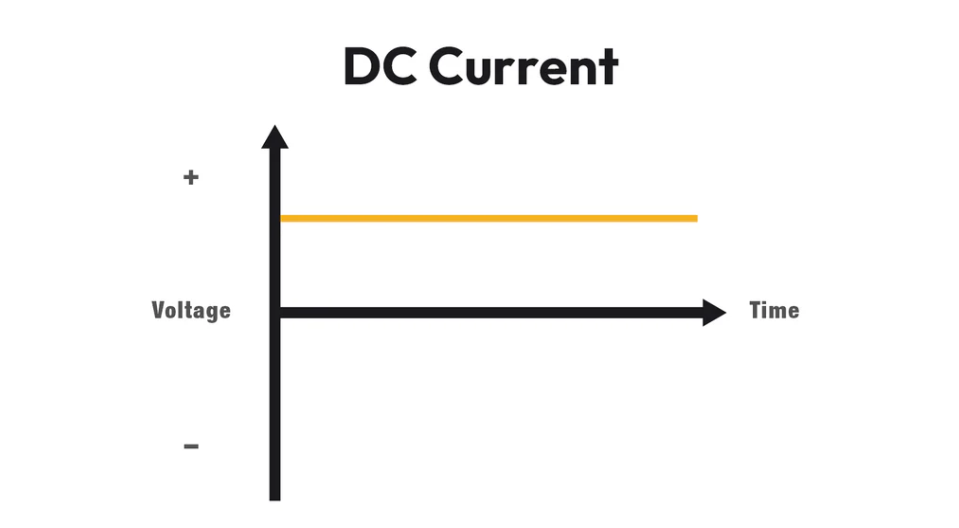
Direct Current is the unidirectional flow of electric charge. Unlike Alternating Current (AC), which oscillates back and forth, DC moves steadily in a single direction. This characteristic makes DC the natural power partner for electronic devices, including smartphones, laptops, and—importantly—LEDs.
Key Features of DC
- Unidirectional flow – electrons move consistently from negative to positive.
- Stable voltage – minimal fluctuations make DC ideal for sensitive electronics.
- Efficient transmission in small systems reduces conversion losses in low-voltage circuits.
- Safety advantage – low-voltage DC is safer for human contact compared to AC.
When paired with LED technology, these features ensure stability, efficiency, and durability.
Why LEDs Require Direct Current
Light-emitting diodes (LEDs) are semiconductor devices that emit light when an electric current passes through them. By design, LEDs only allow current to flow in one direction. This makes them inherently DC devices.
If connected directly to AC, LEDs would flicker at twice the frequency of the power supply (50–60 Hz), causing visual discomfort and reducing efficiency. To resolve this, AC-powered LED fixtures typically include internal rectifiers or external drivers that convert the AC power to DC.
Therefore, at the core of every LED system lies Direct Current.
The Application of Direct Current in LED Lighting: A Stable and Efficient Power Source
1. Enhanced Energy Efficiency
One of the strongest advantages of DC in LED lighting is its energy efficiency. LEDs powered directly with DC avoid multiple AC-DC conversions, which typically waste 10–20% of energy. When deployed at scale in smart cities, commercial buildings, or solar installations, this efficiency gain translates into massive savings.
👉 Example: A commercial building that switches to a centralized DC system can cut lighting energy losses by up to 15%.
2. Stability and Flicker Reduction
AC power can cause voltage fluctuations, leading to visible flickering in poorly designed LED fixtures. This flicker is not only irritating but may also contribute to eye strain and headaches.
By contrast, DC provides constant voltage and current flow, ensuring:
- Smooth light output
- No flicker effects
- Better comfort in workplaces, schools, and homes
For environments like hospitals and laboratories where visual accuracy and health are critical, the application of Direct Current in LED lighting is invaluable.
3. Longer Lifespan for LEDs
LEDs are marketed for their long service life—often 25,000 to 50,000 hours. However, their longevity depends heavily on a stable power supply. Voltage fluctuations in AC can stress LED drivers, shorten component life, and cause premature failure.
Direct Current provides a consistent supply, reducing thermal stress and electronic wear. Studies have shown that LEDs powered directly with DC last significantly longer than those relying on AC conversion circuits.
4. Compatibility with Renewable Energy
Most renewable energy sources—solar panels, wind turbines, and batteries—naturally produce DC power. Using AC systems with these requires extra inverters, which add cost and reduce efficiency.
By contrast, DC-powered LED lighting integrates seamlessly with:
- Solar street lighting
- Off-grid systems
- Battery-based energy storage
This compatibility reduces system complexity and enhances overall sustainability.
5. Safety Advantages
Low-voltage DC systems are inherently safer. While high-voltage AC can deliver dangerous shocks, DC lighting systems—commonly operating at 12V, 24V, or 48V—pose much lower risks.
This makes DC LED systems ideal for:
- Schools and playgrounds
- Healthcare environments
- Residential lighting in children’s rooms
- Automotive and marine applications
6. Cost Efficiency in the Long Term
Although DC systems may require upfront investment in specialized wiring or power distribution, they provide significant cost savings over time.
- Lower maintenance (fewer driver failures)
- Reduced energy bills
- Compatibility with renewables reduces grid dependency
- The extended lifespan of LEDs reduces replacement frequency
For large facilities, this can mean millions in savings over the system’s lifetime.
7. Smart Lighting and DC Grids
With the rise of DC microgrids, more cities and companies are shifting toward direct DC distribution networks. These networks integrate LED lighting, HVAC systems, and renewable energy into a single efficient loop.
In such systems, LED lighting becomes an essential component:
- Easily controlled by smart systems
- Powered directly from renewable DC sources
- Integrated into building energy management platforms
Technical Considerations for DC LED Systems
Voltage Levels
Most DC LED systems operate on low voltages:
- 12V DC – Common in automotive and small residential systems
- 24V DC – Widely used in commercial applications
- 48V DC – Standard for large installations and data centers
Choosing the right voltage ensures safety, efficiency, and compatibility.
DC Drivers and Converters
While LEDs inherently run on DC, they still require drivers to regulate voltage and current. In DC systems, these drivers are simpler and more efficient compared to AC-DC converters.
Benefits:
- Reduced heat → less energy wasted
- Compact size → more design flexibility
- Lower failure rates
Integration with AC Systems
Most existing infrastructure is AC-based. Therefore, hybrid solutions are often used:
- AC distribution with local DC drivers
- Centralized DC bus connected to AC mains
- Full DC microgrid in advanced setups
Transitioning fully to DC requires investment but provides long-term gains in efficiency and sustainability.
Real-World Applications of DC LED Lighting
Residential Lighting
- Stable, flicker-free light
- Compatible with solar home systems
- Safer for families
Commercial Buildings
- Reduced energy losses
- Integration with smart controls
- Long lifespan lowers maintenance
Street Lighting
- Solar + DC LEDs for off-grid operation
- Lower municipal costs
- Reliable operation in remote areas
Automotive and Aviation
- Vehicles already rely on DC power systems
- LED headlights, dashboards, and interior lights operate directly from DC sources
Data Centers and Telecom
- High energy demand makes efficiency critical
- DC microgrids power LEDs, servers, and cooling systems with minimal conversion losses
Challenges in DC LED Adoption
Despite its advantages, challenges remain:
- Existing AC infrastructure – widespread retrofitting is costly.
- Standardization issues – lack of universal DC standards hinders large-scale adoption.
- Upfront investment – new wiring, converters, and distribution systems require capital.
However, with the growing demand for renewable energy and sustainable buildings, these barriers are steadily diminishing.
Future Outlook
The application of Direct Current in LED lighting aligns perfectly with global goals of sustainability, efficiency, and smart energy use. As more renewable energy sources come online and DC microgrids expand, LEDs will play a central role in the transition.
By reducing flicker, extending lifespan, and enhancing energy savings, DC LED systems will likely become the default standard in both residential and commercial applications within the next two decades.
Conclusion
The application of Direct Current in LED lighting offers a stable, efficient, and future-proof power source. From homes and offices to smart cities and renewable energy projects, DC not only optimizes LED performance but also aligns with global sustainability goals.
Whether you are a homeowner seeking safer and more reliable lighting or a city planner designing energy-efficient infrastructure, adopting DC-powered LED lighting represents a smart investment for the future.