
1300W LED Grow Light 3770 µmol/s Full Spectrum | SPACELUX
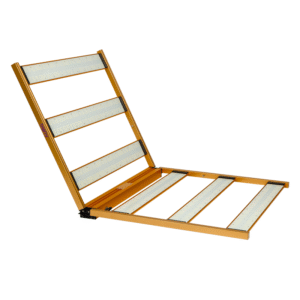
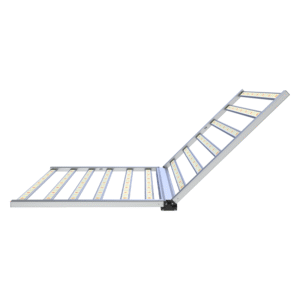
The SPACELUX 1300W LED Grow Light (SPL-ZP610-1300) is a flagship high-power fixture built for large-scale commercial cultivation, vertical farming operations, and greenhouse facilities where maximum light output is non-negotiable. Delivering an extraordinary 3770 µmol/s PPF at 2.9 µmol/J photon efficacy, this light generates the intense canopy-penetrating photon flux that commercial crops demand during peak flowering and fruiting stages. Equipped with a UL-listed brand driver, 6-band full spectrum (3000K + 5000K + 660nm + 730nm + 395nm + 450nm), and WiFi/Bluetooth smart control with daisy-chain capability for 100+ fixtures — the SPL-ZP610-1300 is engineered for growers who need serious, scalable lighting infrastructure.
Key Features and Benefits
Reliable Power and UL-Listed Safety
The SPL-ZP610-1300 is powered by a UL-listed brand driver specifically selected for commercial horticulture environments. UL listing means the driver has passed rigorous independent safety testing for electrical shock, fire, and overload protection — a critical requirement for insurance compliance and facility inspections in North America and many international markets. The driver delivers rock-stable output across a wide voltage range (AC180V–277V), with a power factor greater than or equal to 0.95, minimizing harmonic distortion that can affect other equipment on shared electrical circuits.
Maximum Efficiency with Extended Lifespan
At 2.9 µmol/J photosynthetic photon efficacy, the SPL-ZP610-1300 converts electrical input into usable plant light with industry-leading efficiency. The high-efficiency LED array runs each diode below its maximum rated current, reducing thermal stress and significantly extending fixture lifespan beyond the 50,000-hour rated lifetime. For commercial operations running lights 16–18 hours per day, this translates to 8+ years of reliable service before any meaningful light depreciation — protecting your investment and reducing replacement frequency.
Precision 6-Band Full Spectrum
Unlike single-channel white LEDs, the SPL-ZP610-1300 uses a carefully engineered 6-band spectrum that targets every photoreceptor plants use for photosynthesis and photomorphogenesis: 3000K warm white for flowering response, 5000K cool white for vegetative growth, 660nm deep red for photosynthetic efficiency, 730nm far-red for Emerson enhancement and flowering control, 395nm violet for phototropism and anthocyanin production, and 450nm blue for compact canopy structure and root development. This multi-band approach delivers up to 20–40% yield improvement over single-spectrum fixtures, as documented across multiple commercial grow trials.
Versatile Dimming and Smart Control
Fine-tune your grow environment with dual dimming options: a physical VR 0-10V knob on the fixture for quick manual adjustments, and a precision RJ11 port for integration with environmental controllers. The included WiFi/Bluetooth smart controller and mobile app let you manage your entire grow operation from your smartphone — set automated sunrise/sunset schedules, adjust intensity by zone, monitor power consumption in real time, and receive alerts. The daisy-chain architecture supports 100+ fixtures on a single control network, making it practical for warehouses and greenhouses with hundreds of lights.
Effortless Large-Scale Management
The daisy-chain design is not an afterthought — it is a core engineering feature. Connect 100+ fixtures in a single chain, control them all from one app interface, and eliminate the need for individual fixture programming. This is critical for commercial operations where consistency across hundreds of lights directly impacts crop uniformity and yield predictability. Compatible with most major greenhouse automation systems via the 0-10V protocol.
Full Customization Available
Need a different spectrum formula for your specific crop? Want modified dimensions to fit your existing racking system? Require your branding on the housing for OEM distribution? SPACELUX offers full customization from spectrum tuning to physical design. Our engineering team works with commercial growers and OEM partners to deliver bespoke solutions — from prototype to mass production. Contact us to discuss your specific requirements.
Ideal Applications
Commercial Cannabis Cultivation
The SPL-ZP610-1300 delivers the high-intensity photon flux that flowering cannabis demands. At 12 inches from canopy, one fixture covers a 6 x 4 foot footprint with uniform PAR distribution. The 660nm + 730nm combination is particularly effective for triggering and sustaining flower production, while the 395nm violet band promotes terpene and cannabinoid development.
Large-Scale Vertical Farms
For multi-tier operations requiring maximum photon output per square foot, the SPL-ZP610-1300 provides the concentrated light energy needed to drive photosynthesis in dense canopy environments. The daisy-chain control system allows facility managers to adjust all tiers simultaneously from a single interface.
Greenhouse Supplemental Lighting
Extend your growing season and boost winter production with powerful supplemental lighting that punches through natural cloud cover and short daylight hours. The wide 120-degree beam angle ensures even coverage across greenhouse benches and troughs. AC180V–277V compatibility works with standard three-phase greenhouse electrical infrastructure.
Research and Breeding Programs
Universities and agricultural research stations use the SPL-ZP610-1300 for controlled environment studies where precise spectrum manipulation and reproducible results are essential. The 6-band design allows researchers to isolate the effects of individual wavelengths on plant development, flowering response, and secondary metabolite production.
Technical Specifications
Model: SPL-ZP610-1300
Output Power: 1300W
LED Chips: 3000K + 5000K + 660nm + 730nm + 395nm + 450nm
PPF (Photosynthetic Photon Flux): 3770 µmol/s
PPE (Photon Efficacy): 2.9 µmol/J
Input Voltage: AC180V – 277V
Input Current: 4.69A – 7.22A (voltage dependent)
Power Factor: Greater than or equal to 0.95
Frequency: 50–60Hz
Dimming: 0-10V knob + RJ11 port + WiFi/Bluetooth app
Daisy Chain: Up to 100+ fixtures
Beam Angle: 120 degrees
Lifetime: 50,000+ hours
Working Temperature: -20°C to +40°C
Warranty: 3 years
Driver: UL-listed brand driver
Coverage Guidelines:
At 12 inches from canopy: 6 x 4 ft (180 x 120 cm)
At 18 inches from the canopy: expanded footprint, lower intensity ideal for vegetative growth
At 24 inches from the canopy: widest coverage, suitable for seedling propagation and low-light crops
The Science Behind Your Spectrum
Understanding how each wavelength affects plant development helps you optimize your grow environment for maximum results.
395nm Violet Light
Violet light sits at the center of plant phototaxis, the biological mechanism that directs plant growth toward light sources. It plays a critical role in photomorphogenesis, influencing leaf thickness, stem elongation, and overall plant architecture. Violet light also inhibits excessive stem elongation (preventing leggy growth) and stimulates anthocyanin production, which enhances fruit coloration, petal vibrancy, and leaf pigmentation in many high-value crops.
450nm Blue Light
Blue light is essential during the early vegetative stage, promoting strong root system development and compact, sturdy stem growth. Chlorophyll a and chlorophyll b have peak absorption rates in the blue spectrum, driving protein and amino acid synthesis that forms the structural foundation of healthy plants. Proper blue light exposure during vegetative growth results in shorter internode spacing and denser canopy structure.
660nm Deep Red Light
Red light is the primary driver of photosynthesis. Under appropriate blue light conditions, photosynthetic efficiency reaches its maximum at 660nm. Red light stimulates carbohydrate production, promoting taller plants with larger leaf surfaces for greater light interception. In low-light environments, 660nm delivers the highest photosynthetic efficiency of any single wavelength.
730nm Far-Red Infrared
Far-red light plays a unique role in plant development by converting the photoreceptor pigment Pfr into Pr, which influences flowering timing and photoperiod control. When combined with 660nm, the Emerson Enhancement Effect produces photosynthetic rates significantly higher than either wavelength alone, making the 660nm + 730nm combination one of the most effective spectral pairings in horticulture lighting.
Frequently Asked Questions
How much area does one 1300W fixture cover?
One SPL-ZP610-1300 covers approximately 6 x 4 feet (180 x 120 cm) when mounted at 12 inches from the canopy. At 18 inches, coverage expands but peak intensity decreases, suitable for vegetative growth or light-loving crops. At 24 inches, the footprint is widest, but intensity drops significantly, appropriate for seedling propagation or low-light crops. For commercial flowering operations targeting maximum yield, we recommend a 12-inch hanging height. Contact our engineers for a free lighting layout customized to your facility dimensions and crop type.
Can I control 100+ lights from one app?
Yes. The daisy-chain architecture connects fixtures in a single network, all controllable from the WiFi/Bluetooth mobile app. You can create zones (e.g., veg room, flower room, drying area), set independent schedules and intensity levels for each zone, and monitor real-time power consumption across your entire operation. The system supports 100+ fixtures per chain, making it practical for large commercial facilities with hundreds of lights.
What spectrum does this light use? Can I customize it?
The default 6-band spectrum combines 3000K warm white, 5000K cool white, 660nm deep red, 730nm far-red, 395nm violet, and 450nm blue LEDs. This full-spectrum formula is optimized for the complete plant life cycle from vegetative growth through flowering and fruiting. For OEM and bulk orders, we offer full spectrum customization. Adjust individual wavelength ratios, add or remove bands, or create a completely custom light recipe for your specific crop. Minimum order for custom spectrum is 50 units.
Is this light suitable for cannabis cultivation?
Yes, the SPL-ZP610-1300 is specifically designed for high-light-demand crops including cannabis. The 660nm + 730nm combination effectively triggers and sustains flower production, while the 395nm violet band promotes terpene and cannabinoid development. The 3770 umol/s PPF provides the intense photon flux that flowering cannabis requires for maximum bud development. Multiple commercial cannabis cultivators across North America, Thailand, and Europe currently use this fixture.
What certifications does it have?
The driver carries UL Listing for electrical safety compliance in the USA and Canada. The fixture meets CE and CB standards for international markets. All components undergo 24-hour burn-in testing and automated optical inspection at our ISO9001-certified manufacturing facility. For markets requiring additional certifications (SAA for Australia, SASO for Middle East, etc.), contact our sales team. We support certification procurement for qualified bulk orders.
Why Choose SPACELUX?
8+ Years of Specialized Experience
SPACELUX has focused exclusively on professional-grade horticulture and commercial LED lighting since our founding. Our engineering team brings deep expertise in spectral science, thermal management, and large-scale lighting system design, knowledge that comes from years of working directly with commercial growers and solving real-world cultivation challenges.
ISO9001-Certified Manufacturing
Every SPL-ZP610-1300 undergoes a rigorous quality control process at our 8,000-square-meter facility: automated LED binning and SMT placement, 24-hour burn-in testing at full load, photometric calibration against NIST-traceable standards, waterproofness and thermal cycling verification, and full electrical safety testing. We maintain complete traceability from individual LED component batches through final assembly.
Global Export to 50+ Countries
From vertical farms in Singapore and the Netherlands to cannabis facilities in North America and Thailand, greenhouse operations across Europe and Africa, and agricultural projects throughout the Middle East and Asia, SPACELUX fixtures are proven in diverse climates and regulatory environments. We handle international documentation, customs compliance, and logistics coordination.
Flexible OEM/ODM Services
Custom spectrum, custom housing design, custom branding, custom packaging, our engineering team delivers fully bespoke solutions from prototype to mass production in as few as 8 weeks. OEM minimum orders start at 50 units for custom spectrum configurations and 200 units for full custom housing design.
Direct Factory Pricing
Buy directly from the manufacturer. No distributor markups, no wholesaler margins. Get competitive unit pricing, faster technical support response times, and the ability to request custom modifications without intermediary delays. Protect your margins with factory-direct quality.
1300W LED Grow Light Image

The effect of light quality on plants
395nm violet light
1. Purple light is the central area of plant phototaxis and can affect plant morphogenesis.
2. Purple light inhibits the growth of the trunk and foliar surfaces of plants (inhibits leggy growth).
3. Purple light can stimulate plant cyan pigments, causing plant fruits/petals or leaves to color and improve quality
450nm blue light
1. Blue light has a significant impact on the early stages of plant growth, assisting plants in establishing a well-developed root system.
2 . Blue light inhibits the growth of the plant’s trunk and leaf surface, but increases the sturdiness of the trunk.
3 . Chlorophyll a/b has a strong absorption rate in the blue light region and mainly helps plants synthesize proteins and amino acids
660nm red light
1. Red light is the main force of photosynthesis, and under certain blue light conditions, the efficiency of photosynthesis is at its best.
2. Red light mainly helps plants produce carbohydrates, which makes the plant grow taller and the leaf surface larger.
3. In weak light environments, red light has the highest efficiency in promoting photosynthesis in plants.
730nm infrared light
1. Through infrared light irradiation, the photosensitive pigment Pfr is converted into Pr, thereby inhibiting plant flowering and controlling the flowering cycle:
2 . Combined with 660nm, dual-light gain benefits can be achieved, which is much higher than the photosynthesis efficiency of 660nm alone.
The effect of light quality on plants
SPECTRUM


Distance From Canopy:12″(6*4FT)

Distance From Canopy:18″(6*4FT)

Distance From Canopy:24″(6*4FT)