Dimming capability is a defining feature of modern LED lighting, allowing users to adjust the light output to match their activity, mood, or energy-saving goals. Unlike legacy incandescent lamps that dim smoothly and predictably, LEDs rely on integrated electronics, control protocols, and driver performance to achieve stable, flicker-free dimming. Understanding dimming range—the span between the lowest and highest achievable light output—is essential for lighting designers, manufacturers, and end-users seeking optimal performance.
What Is Dimming Range?
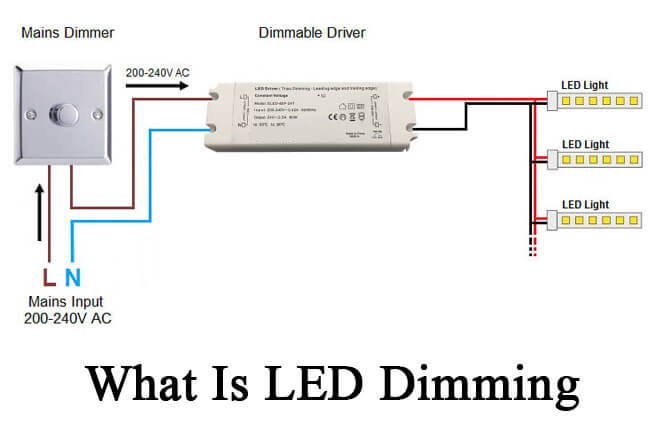
The dimming range refers to the minimum and maximum light output levels that an LED luminaire can produce while maintaining stable operation.
- The maximum level (100%) corresponds to full-brightness operation.
- Minimum level (e.g., 1%, 3%, 10%) indicates how low the LED can dim before flicker, instability, color shift, or dropout occurs.
A high-performance LED system typically offers a wide dimming range—often from 100% down to 1% or even lower—enabling precise light control and improved visual comfort.
LED Dimming Technologies
1. Pulse Width Modulation (PWM)
PWM controls brightness by switching the LED on and off at high frequency. The percentage of “on time” determines perceived brightness.
Advantages:
- Excellent low-level dimming
- Good color consistency
- Low risk of flicker when frequencies exceed recommended thresholds
2. Constant Current Reduction (CCR) / Analog Dimming
CCR reduces the drive current flowing through the LED.
Advantages:
- Smooth dimming response
- Efficient at mid-to-high dimming levels
Limitations: - Potential color shift at lower currents
Many advanced LED drivers use a hybrid approach, combining high-frequency PWM at low levels and CCR at higher levels.
Dimming Control Methods and Protocols
1. TRIAC / Phase-Cut Dimming
Used primarily in retrofit applications.
Pros: Compatible with existing wiring
Cons: Limited dimming range, potential for flicker, driver compatibility issues
2. 0–10V Dimming
Simple low-voltage interface used in commercial settings.
- Typical dimming range: 100%–1%
- Requires separate control wiring
3. DALI and DALI-2 (Digital Addressable Lighting Interface)
Digital protocol offering precision control and system feedback.
- Dimming range can reach <1%, depending on the driver
- Ideal for smart buildings and networked systems
4. Wireless Controls (Zigbee, Bluetooth Mesh, BLE, Wi-Fi)
Enable flexible, app-based, and automated dimming.
- Range varies by driver capabilities
- Ideal for residential and retrofit smart-home use
Applications of Dimming Range in LED Lighting
1. Residential Lighting
Wide dimming range allows smooth light transitions for living spaces, bedrooms, and kitchens—enhancing comfort and ambience.
2. Commercial and Office Spaces
Dimming supports daylight harvesting, task tuning, and energy management, lowering operational cost while improving occupant comfort.
3. Hospitality and Retail
Fine-tuned dimming enhances visual presentation, supports brand identity, and helps create inviting atmospheres.
4. Theatrical and Entertainment Lighting
Requires deep, flicker-free dimming down to <1% for scene transitions and mood setting.
5. Industrial and Warehouse Facilities
Task-dependent dimming helps reduce energy consumption during low-activity periods.
Key Considerations for Selecting Dimming Range in LED Systems
1. Minimum Dimming Level
A lower minimum (e.g., 1% instead of 10%) provides greater flexibility for mood lighting and energy savings.
2. Flicker Performance
Poor dimming can introduce visible or stroboscopic flicker. Systems should meet standards such as IEEE 1789.
3. Driver and Dimmer Compatibility
Even high-quality LEDs may not perform well if paired with incompatible dimmers. Manufacturer compatibility lists are essential.
4. Color Stability
Some LEDs shift color at low output levels. Superior driver design and PWM control can minimize this issue.
5. Smoothness and Curve Characteristics
Look for:
- Stepless dimming
- Consistent dimming curve (linear, logarithmic, or custom)
- No sudden dropout at low levels
6. Application-Driven Requirements
For architectural lighting, deep dimming is crucial.
For general lighting, a 10% minimum may be acceptable.
For cinema, museums, or luxury spaces, 1% or lower is recommended.
Benefits of a Wide Dimming Range
- Energy savings: Lights can be set to required levels rather than at full output.
- Improved comfort: Reduced glare and eye strain.
- Enhanced ambiance: Better control over mood and visual environment.
- Extended LED lifespan: Lower operating temperatures at reduced output.
Conclusion
The dimming range of LED lighting plays a critical role in lighting quality, user comfort, and system efficiency. By understanding the underlying technology, control protocols, and application-specific needs, lighting designers and consumers can select LED solutions that deliver smooth, flicker-free dimming with reliable performance. As LED drivers and control systems continue to evolve, increasingly precise and deep-range dimming will become standard across residential, commercial, and specialty lighting applications.