
Executive summary
Energy-efficient DALI-2 emergency drivers EU are reshaping how building owners, lighting designers, and facility managers approach emergency lighting in the European market. This article compares the total cost of ownership (TCO), energy use, compliance, installation, and maintenance differences between modern DALI-2 emergency drivers and traditional emergency lighting solutions in the EU. You’ll get a practical cost analysis, lifecycle examples, standards and compliance notes, and procurement guidance so you can decide which approach delivers the best long-term value.
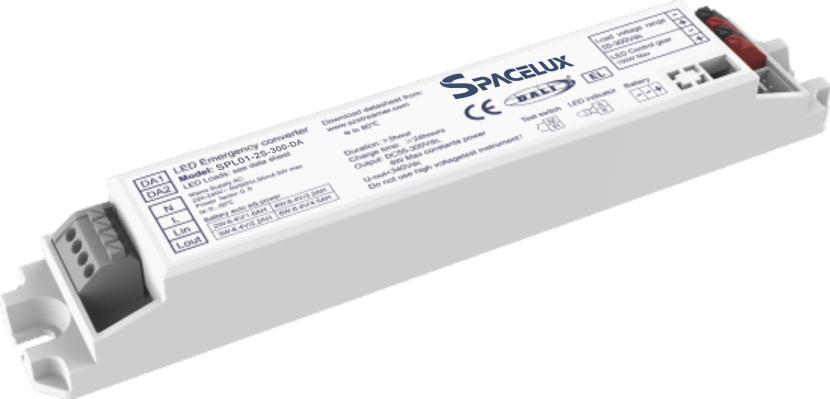
Key takeaways (short):
- DALI-2 emergency drivers dramatically improve monitoring, testing automation, and interoperability vs traditional drivers. tridonic.comdali-alliance.org
- Energy and maintenance savings often offset higher upfront costs within 3–7 years in mid-to-large installations. SpringerLink
- DALI-2 solutions ease compliance with EU emergency lighting standards when used correctly
Why compare DALI2.0 vs traditional emergency drivers?
Emergency lighting is safety-critical and regulated. For a long time, traditional emergency drivers (simple self-contained battery packs or mains-tied converters) met minimum requirements but lacked digital monitoring, remote testing, and standardized interoperability. DALI-2 emergency drivers bring digital control, richer diagnostics, and centralised management — all of which affect both direct costs (equipment, installation) and indirect costs (testing, maintenance, energy). Comparing them on a realistic financial model gives procurement teams the data needed to choose the best solution for their building portfolio.
What is a DALI-2 emergency driver? (Features & how it aligns with DALI2.0)
A DALI-2 emergency driver is an LED driver or self-contained emergency lighting module that implements the DALI-2 (IEC 62386 parts) specifications for emergency devices — notably the parts addressing emergency operation and diagnostics. Key features include:
- Two-way digital communication (status, test results, diagnostics) over the DALI bus, enabling central monitoring and automated reporting. tridonic.comdali-alliance.org
- Standardised emergency part (IEC 62386-202 / DALI-2 part 202) ensuring interoperability between emergency drivers and lighting management systems from multiple vendors. tridonic.com
- Built-in test routines (automatic/selftest and central test control) that reduce manual on-site testing. Many units support configurable self-test schedules and auto-reporting. dali-alliance.orgmackwell.com
- Energy metering & diagnostics (lumDATA / DALI data parts) that can report energy consumption, battery health, and run-time statistics. This supports predictive maintenance and energy optimisation. tridonic.comLumos Controls
- Modern battery chemistries (e.g., LiFePO4) are available in some DALI-2 emergency modules for longer life and better cycle performance compared with legacy NiCd backups. tridonic.com
These features align with the DALI2.0/emergency driver feature descriptions expected by the DALI Alliance and major manufacturers: interoperability, automated testing & monitoring, and data-driven maintenance. In short, DALI-2 emergency drivers are digital-ready, test-automated, and data-rich compared to traditional analog emergency gear. dali-alliance.orgtridonic.com
EU regulatory and standards context (short primer)
If you install emergency lighting in the EU, you must meet standards and local regulations, including (but not limited to):
- EN 60598-2-22 (particular requirements for luminaires for emergency lighting). https://www.en-standard.eu
- EN 1838 (emergency escape lighting requirements). Teknoware
- Local national codes and maintenance obligations (often referencing EN 50172 and EN 62034 for testing/automatic test systems).
DALI-2 emergency drivers can simplify compliance: their automatic test reporting helps with maintenance records and evidence of statutory testing; their photometric compatibility and documented run-times simplify siting and design decisions under EN 1838 and EN 60598-2-22. Always confirm national transpositions and local authority requirements during design. Teknowarehttps://www.en-standard.eu
Cost model — what we compare and key assumptions
What we include
- Capex: device cost (driver/module), control gear, controllers, cabling, and installation labour.
- Install complexity: time differences for bus wiring and system commissioning.
- Operating costs: energy consumed by emergency drivers and standby losses; battery replacements; time spent on manual monthly and annual testing; remote management costs (software subscriptions, if any).
- Maintenance & end-of-life: expected battery replacement cycles and disposal.
- Compliance testing costs: labour and possible site disruption.
Assumptions (baseline)
- Building: mid-sized office (50 luminaires) and large retail (500 luminaires) scenarios were used later.
- Lifetime horizon: 10 years.
- Discounting: not applied in simplified examples; you can easily add a discount rate for NPV analysis.
- Energy price: EU average electricity €0.32/kWh (example — verify local price). (Note: energy price varies across EU member states.)
- Labour rate for electrician/engineer: €55/hour (installation) and €70/hour (annual testing/inspection).
- Manual monthly test: 15 minutes per luminaire per month, automated central report reduced by 90% of testing labour.
- Battery replacement: traditional NiCd every 4–6 years; LiFePO4 or modern chemistries 8–10 years, depending on spec. (Manufacturer specs should be consulted.) tridonic.comSpringerLink
Note: These are example assumptions to illustrate the model. Replace with your project’s local electricity rates, labour costs, and manufacturer technical specs for precise procurement decisions.
Direct cost comparison: Capex, installation & commissioning
Typical equipment prices (illustrative)
- Traditional emergency driver/converter (basic self-contained): €20–€40 per luminaire.
- DALI-2 emergency driver (certified module + DALI bus-capable driver): €55–€140 per luminaire, depending on features (battery chemistry, lumDATA, certification). dali-alliance.orgtridonic.com
Cabling & commissioning
- Traditional: usually straightforward single-device wiring; lower initial labour.
- DALI-2: adds DALI bus wiring (if not already present) and system controller commissioning. For new installations, the incremental wiring cost is modest; for retrofits it can be higher if the bus must be run. Commissioning time can be higher up-front for DALI-2 (system configuration, addressing, and test schedule setup), but this is a one-time cost that reduces long-term testing labor.
Example: small project (50 luminaires)
- Traditional hardware: 50 × €30 = €1,500
- DALI-2 hardware: 50 × €90 = €4,500
- Extra commissioning & wiring for DALI-2: €1,500 (one-time)
- Upfront premium for DALI-2: approx. €4,500 — €3,000 = €1,500 difference in capex for this example (numbers illustrative).
DALI-2 typically has higher capex but provides more value in operations (see next section).
Operating cost comparison: energy, testing, and maintenance
Operating costs drive ROI for DALI-2. Consider three main areas:
1) Energy consumption and standby losses
Traditional emergency units often draw passive standby current to keep batteries charged and may have less efficient charging electronics. Modern DALI-2 modules are designed for low standby power and sometimes include energy metering to optimize schedules. Academic and industry reviews show that energy-efficient LEDs and smarter charging/idle strategies reduce overall energy consumption for emergency luminaires. SpringerLinkLumos Controls
Illustrative calculation (per luminaire, per year):
- Traditional standby energy: 1.5 W average -> 1.5 W × 24h × 365 = 13.14 kWh/year -> at €0.32/kWh = €4.20/year
- DALI-2 optimized standby: 0.6 W average -> 5.26 kWh/year -> €1.68/year
- Annual energy saving per luminaire: €2.52
For 50 luminaires: €126/year saved; for 500 luminaires: €1,260/year saved. Over 10 years, this can be meaningful when combined with maintenance savings.
Replace the wattage and electricity price with your project’s data for accurate results.
2) Testing & compliance labor
- Manual approach: monthly visual checks and annual full-duration tests typically require an electrician or technician on-site. Monthly manual tests may consume substantial labor hours across many luminaires.
- DALI-2 automated approach: automatic self-tests, scheduled full-duration tests, and central reporting reduce the on-site hours dramatically (often by 70–95%), while providing auditable logs.
Example (50 luminaires):
- Manual monthly check: 15 minutes × 50 = 12.5 hours/month -> 150 hours/year. At €70/hour = €10,500/year.
- DALI-2 automated: initial configuration may be 8 hours + remote monitoring subscription €500/year; on-site checks reduced to 10 hours/year -> ~€700/year.
- Annual savings: ~€9,800/year (massive difference — this is the most influential cost element in many real projects).
These labour numbers are intentionally illustrative; real projects often show similar magnitude differences in annual testing labour when many luminaires are involved. The automation advantage is especially strong in multi-site portfolios and large installations. tridonic.commackwell.com
3) Battery replacements and end-of-life
- Traditional NiCd or NiMH batteries often need replacement mid-life (4–6 years). Modern chemistries like LiFePO4 used in many DALI-2-certified emergency modules can extend service life to 8–10 years, reducing replacement frequency and waste-handling costs. tridonic.com
Lifecycle cost examples (10-year horizon)
Below are three simplified scenarios to show how savings add up. All numbers are illustrative — use manufacturer datasheets and local costs for procurement.
Scenario A — Small office (50 luminaires)
- Upfront difference (DALI-2 premium): €1,500
- Annual energy saving: €126
- Annual testing & maintenance labour saved: €9,800 (see above)
- Battery replacement saved once every 10 years: €1,200 saved over 10 years
10-year simplified savings:
- Annual savings ×10 = €9,926
- Minus upfront premium €1,500 -> Net saving ≈ €8,426 over 10 years.
Result: DALI-2 pays back in <2 years in this illustrative model because of large labour savings from automated testing.
Scenario B — Large retail site (500 luminaires)
- Upfront premium: 500 × (€90 – €30) = €30,000
- Annual energy saving: €1,260
- Annual testing & maintenance labour saved: €98,000 (scaled from 50-luminaire example)
- Battery savings and better diagnostics reduce unplanned replacements and outage risk.
10-year simplified savings:
- Annual savings ×10 = €99,260
- Minus upfront premium €30,000 -> Net saving ≈ €69,260 over 10 years.
Result: For large installations, DALI-2 can deliver substantial lifecycle savings mostly via maintenance automation and centralized fault detection.
Scenario C — Retrofit into an existing building without a DALI bus
If the DALI bus must be retrofitted, initial wiring/installation costs rise, and payback times extend. Still, for portfolios and phased upgrades, installing DALI-2 in high-risk or high-density areas first yields early wins while deferring full retrofit cost.
Non-financial benefits and risks
Benefits
- Improved safety and reliability through centralised fault detection and real-time diagnostics. tridonic.com
- Audit trails & compliance via automatic test logs are useful for fire authorities and insurers. mackwell.com
- Interoperability across vendors due to DALI-2 certification reduces vendor lock-in. dali-alliance.orgtridonic.com
- Better sustainability: fewer battery replacements, potential for smarter energy scheduling. SpringerLink
Risks & mitigation
- Higher upfront cost — mitigate via TCO analysis, phased rollouts, or focusing on large clusters first.
- Complexity in commissioning — use experienced integrators and ensure DALI-2 certification of devices. tridonic.com
- Vendor firmware/maintenance model — insist on open DALI-2 compliance and data export capabilities to avoid proprietary lock-in.
Procurement checklist & implementation tips
Before you buy
- Require DALI-2 (IEC 62386 parts) certification for emergency drivers (include part 202 where applicable). tridonic.comdali-alliance.org
- Specify battery chemistry & expected cycles (LiFePO4 vs NiCd) and EoL replacement cost. tridonic.com
- Request luminaire runtime, photometric performance, and EN 60598-2-22 compliance documentation. https://www.en-standard.eu
During tender
- Ask for automatic test report examples and how long data is stored and exported.
- Confirm whether the product supports lumDATA/energy metering (parts 251–253) for consumption & diagnostics. Lumos Controls
- Verify cybersecurity practices if the DALI system connects to building management networks.
Deployment tips
- Start with a pilot in one building or floor to validate commissioning workflows and savings.
- Plan cable paths and controllers early to minimise retrofit costs.
- Train facilities staff on reading automated logs and on exception handling (e.g., what faults need on-site intervention).
- Factor in software subscription costs and ensure data portability in RFPs.
Internal links (examples you might add on your site)
/blog/dali-2-overview— DALI-2 protocol explained/resources/emergency-lighting-standards-eu— Deep dive into EN 60598-2-22 & EN 1838/case-studies/dali-2-retrofit-warehouse— Retrofit case example
Conclusion & recommendations
For EU projects where ongoing maintenance, regulatory audits, and portfolio-level efficiency matter, energy-efficient DALI-2 emergency drivers EU typically offer superior lifecycle economics and operational advantages versus traditional emergency solutions — especially as installation scale increases. The major driver of ROI is labour saved from automated testing and centralised diagnostics, followed by energy savings and lower battery replacement costs.
Recommendation summary:
- For single small installations where capex is highly constrained, a basic traditional solution remains viable — but consider DALI-2 if you value long-term maintenance savings.
- For medium to large installations or multi-site portfolios, run a 10-year TCO and prioritise DALI-2 certified emergency drivers. The automated testing and reporting often justify the higher initial cost. tridonic.comSpringerLin
- In retrofits, pilot DALI-2 in high-density/security areas first to capture early savings and lessons learned.
Sources & further reading
- DALI Alliance — product & emergency driver info. dali-alliance.org
- Tridonic press & DALI-2 Part 202 overview (why DALI-2 emergency matters). tridonic.com
- Teknoware — EN standards and emergency lighting basics (EN 60598-2-22, EN 1838). Teknoware
- BS EN IEC 60598-2-22 standards reference. https://www.en-standard.eu
- Academic review on energy efficiency in emergency systems. SpringerLink


