When it comes to LED lighting systems, one component quietly ensures both safety and performance: the insulation class of LED driver. While often overlooked, this classification plays a critical role in preventing electrical hazards, ensuring compliance with international standards, and protecting end users from shock and fire risks.
In this comprehensive guide, we’ll break down everything you need to know about LED driver insulation classes, why they matter, and how they impact your lighting projects. Whether you’re a lighting engineer, facility manager, or homeowner planning a safe installation, understanding insulation classes is essential.
What Is the Insulation Class of the LED Driver?
The insulation class of an LED driver refers to the level of electrical insulation between the input and output circuits inside the driver. Since an LED driver is responsible for converting mains AC voltage to a low DC voltage, insulation is crucial for separating high-voltage components from low-voltage outputs and accessible parts.
The main purpose of insulation classification is to:
- Prevent electric shock to users
- Comply with safety standards like IEC 61347, UL 8750, and ENEC
- Reduce fire risk caused by insulation breakdown
- Ensure long-term reliability of LED systems
Without proper insulation, even the most advanced LED luminaire could become a safety hazard.
Why Insulation Class Matters in LED Drivers
Insulation classes are not just regulatory labels; they are the foundation of safe electrical design. Here’s why they matter:
- User Safety – Prevents direct contact with dangerous mains voltage.
- Product Certification – Compliance with standards is mandatory for CE, UL, and CCC approvals.
- System Reliability – Quality insulation reduces the risk of premature failures.
- Application Suitability – Different environments (outdoor, damp locations, commercial spaces) require specific insulation levels.
For example, LED drivers used in medical lighting must have higher insulation standards than those in residential lighting.
Types of Insulation Classes for LED Drivers
LED driver insulation is classified into categories based on functional, basic, supplementary, and reinforced insulation. Let’s break them down:
1. Functional Insulation
- Purpose: Ensures the LED driver operates correctly.
- Limitation: Does not protect against electric shock.
- Example: Internal circuit separation for stable performance.
2. Basic Insulation
- Purpose: Provides one layer of insulation between live parts and accessible surfaces.
- Risk: If damaged, users could be exposed to high voltage.
- Common Use: Entry-level LED drivers in controlled environments.
3. Supplementary Insulation
- Purpose: An Extra layer of insulation is added to basic insulation.
- Benefit: Protects if the basic layer fails.
- Application: Residential and commercial lighting with higher safety needs.
4. Reinforced Insulation
- Purpose: Equivalent to double insulation, providing maximum safety.
- Strength: Protects users even if one insulation layer is compromised.
- Use Case: Outdoor LED drivers, medical lighting, industrial applications.
📌 Key Takeaway: For maximum safety, look for LED drivers with reinforced insulation.
Insulation Classes vs. Safety Classifications of LED Drivers
It’s important not to confuse insulation class with safety class.
- The insulation class defines the electrical insulation inside the driver.
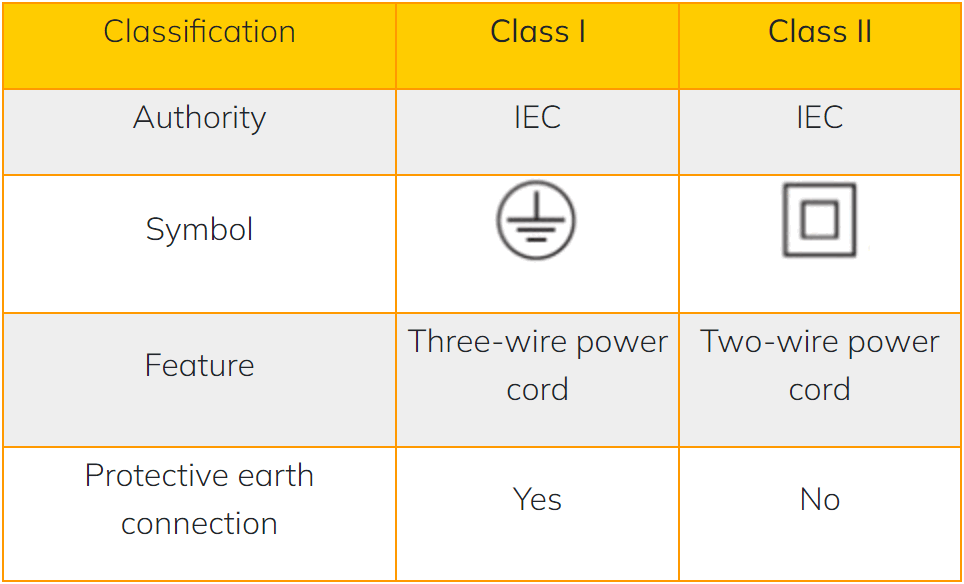
- Safety class (Class I, II, or III) defines how the product is designed for user protection.
Safety Class Overview:
- Class I: Requires grounding for protection.
- Class II: Double or reinforced insulation, no ground required.
- Class III: Operates at Safety Extra Low Voltage (SELV), usually <50V.
Many modern LED drivers combine reinforced insulation with Class II safety compliance for optimal protection.
Standards Governing Insulation Class of LED Drivers
Several international standards dictate insulation requirements for LED drivers:
- IEC 61347-1 & IEC 61347-2-13 – General and specific LED driver safety requirements
- UL 8750 – Standard for LED equipment in North America
- ENEC Certification – European safety compliance
- CCC – China Compulsory Certification
The IEC official website provides detailed standard references.
When selecting a driver, always check compliance markings to ensure it meets your region’s requirements.
Practical Examples: Where Insulation Class Matters
Let’s look at real-world examples of how the insulation class of the LED driver impacts applications:
Example 1: Outdoor LED Street Lighting
- Must withstand moisture and environmental stress
- Reinforced insulation required
- Usually, Class II safety
Example 2: Commercial Office Lighting
- Indoor use, but must comply with occupational safety standards
- At least supplementary insulation
- Either Class I or II, depending on installation
Example 3: Medical Equipment Lighting
- Extremely sensitive environment
- Highest safety standards (reinforced insulation + SELV output)
- Mandatory compliance with IEC 60601
How to Identify the Insulation Class of an LED Driver
When choosing or auditing LED drivers, you can identify the insulation class by:
- Checking product datasheets (often specify insulation type and creepage distances)
- Looking at certification marks (UL, CE, ENEC, TUV)
- Reviewing safety test reports
- Confirm with the manufacturer if unclear
Pro tip: Always request a Declaration of Conformity (DoC) from your supplier to verify compliance.
Key Factors Affecting Insulation Performance
Several factors influence the insulation class effectiveness:
- Material Quality: Epoxy coatings, PCB spacing, and dielectric strength
- Creepage & Clearance Distances: Physical separation between conductive parts
- Environmental Conditions: Humidity, temperature, dust, and voltage surges
- Aging & Wear: Insulation degrades over time due to heat and stress
A well-designed LED driver will anticipate these risks and build redundancy into insulation design.
Common Failures When Insulation Class Is Ignored
Skipping proper insulation in LED drivers can lead to:
- Electrical Shock Hazards
- Short Circuits & Fire Risks
- Driver Burnouts
- Certification Failures
- Reduced Product Lifespan
For businesses, this can mean costly recalls, legal liabilities, and damaged brand reputation.
Best Practices for Choosing Safe LED Drivers
To ensure electrical safety, always:
- Select drivers with reinforced insulation whenever possible
- Verify compliance with IEC/UL safety standards
- Match driver insulation to the application environment
- Avoid cheap, uncertified products (common in gray markets)
- Work with trusted manufacturers and suppliers
🔗 You can explore additional safety guidelines from OSHA Electrical Safety Standards.
Insulation Class of LED Driver Is the Foundation of Safety
The insulation class of the LED driver may not be the most visible specification, but it is undoubtedly one of the most important. It ensures compliance with international safety standards, protects users from hazards, and guarantees reliable long-term performance.
Whether you’re installing LED lighting in a home, office, or industrial facility, never overlook insulation classification. Always choose certified drivers with reinforced insulation for maximum protection.
By understanding insulation classes and their role in safety, you can make smarter decisions, reduce risks, and ensure that your LED lighting projects meet the highest safety standards.