
For the long-term interest, SPACELUX will choose the best solutions for our customers. The microwave sensor 5.8GHz technology used in our tri-proof lighting is more stable and highly efficient.
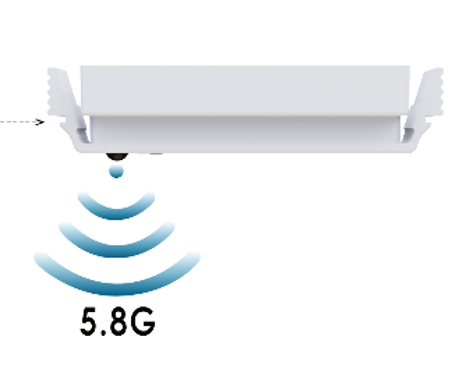
What kinds of technologies existed before the invention of the microwave sensor at 5.8 GHz?
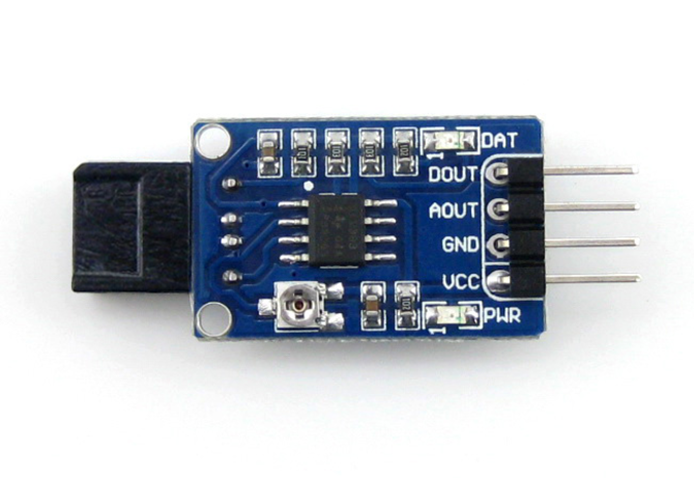
The infrared sensor, widely known in daily life, is a traditional sensing technology that detects the infrared radiation emitted by humans or other objects. It is a nice option for people because of its price and convenience to install. However, the infrared sensor has its limitations as well; the signal will be blocked by objects, and it will be affected by the temperature as well.
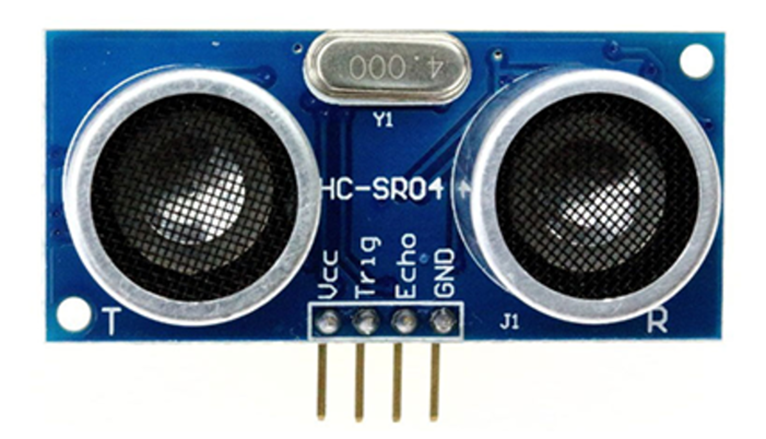
Secondly, there is another sensor on the market called an ultrasonic sensor. Ultrasonic sensors measure the impact of the sound wave on the object to know the speed of sound in the air and calculate the distance to the object. It is widely installed in industrial automation, the automotive industry, and consumer electronics.
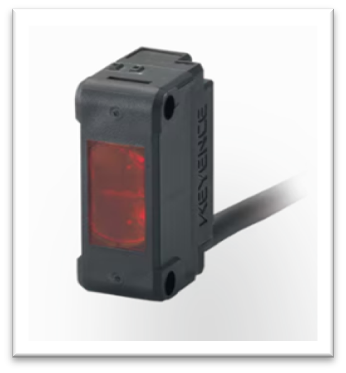
Thirdly, optoelectronic sensors are devices that convert light signals into electrical signals or vice versa. They are widely used in various industries and applications due to their high sensitivity, accuracy, and reliability
Let us talk about the microwave sensor technology that is widely used in the market as well, and then why SPACELUX chose the microwave sensor 5.8GHz for our waterproof lights.
Microwave sensing technology is a technique that utilizes microwave radiation to detect and measure various physical properties of objects or materials. By transmitting microwaves and analyzing the reflected or transmitted signals, it’s possible to obtain information about the target’s distance, velocity, size, shape, and composition.
There are two microwave sensing technologies in the market, including 2.4GHz and 5.8GHz. Both 2.4GHz and 5.8GHz are used frequencies in microwave sensing technology. Each of them has its own unique characteristics and suitable applications.
Impact of Frequency Differences
Penetration
2.4GHz: Weaker penetration, more easily blocked by objects like walls and metals. Therefore, it’s more suitable for short-range measurements and detection.
5.8GHz: Stronger penetration, capable of penetrating some thin non-metallic objects, but still limited for thick metals or concrete.
Resolution:
2.4GHz: Longer wavelength, relatively lower resolution, suitable for detecting and measuring large objects.
5.8GHz: Shorter wavelength, relatively higher resolution, suitable for detecting and measuring small objects.
Anti-interference Ability:
Both frequencies are susceptible to interference from the surrounding environment, such as other wireless devices. However, 5.8GHz is less likely to be occupied, so it generally has better anti-interference capability.
Transmission Distance:
Highly dependent on the environment, but generally, 5.8GHz has a shorter transmission distance due to its shorter wavelength and faster attenuation.
Why did we choose 5.8GHz?
SPACELUX chose the 5.8GHz microwave sensor in our waterproof lights because our luminaries are mostly set up in professional Scenarios, especially in industrial areas. The 5.8GHz is suitable for object detection, distance measurement, and other applications in industrial environments due to its stronger anti-interference ability and penetration capability.
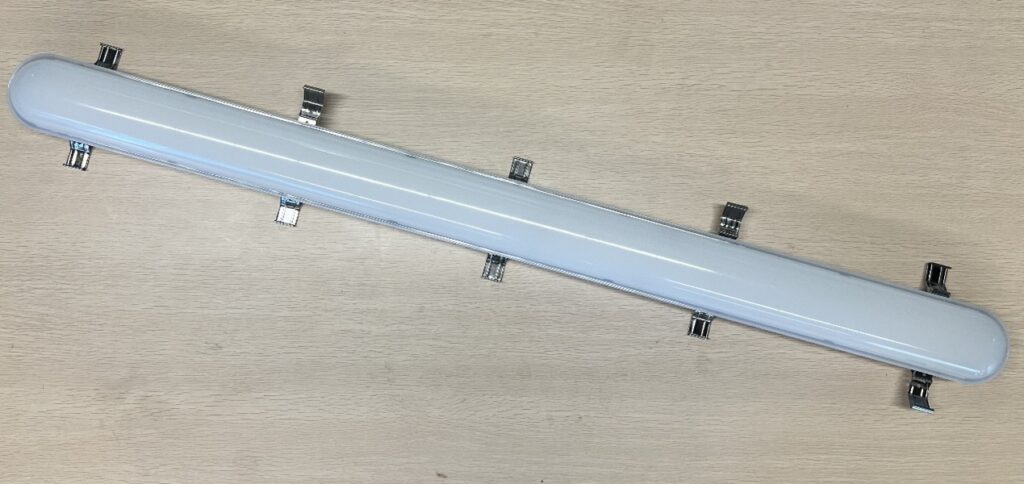
SPACELUX Tri-proof lamp set up an intelligent 5.8G Microwave Motion sensor that has been widely utilized in Europe and Australia’s market for over 4 years. It has adopted an 11mm super-narrow antenna in the industry, with no dark area in sensor mode.
Integrated 5.8G microwave sensor with intelligent performance by 8 dip-switches. Tri-level dimming control. Optional detection range, hold time, and daylight threshold. Another outstanding feature of FS007B is dual-PD technology and an automatic on & off function.
For more details about our microwave sensor waterproof luminaires, please feel free to contact us.


