The peak wavelength secret of LED lighting color is one of the most important yet least understood aspects of LED technology. While most people view LEDs as simply “bright lights” in various colors, engineers, designers, and scientists understand that the actual color perception depends not only on materials or brightness, but specifically on the peak wavelength.
If you’ve ever wondered why two LEDs both labeled “blue” can look slightly different, or why choosing the correct LED wavelength is critical in industries like medical devices, horticulture, and display technology, the answer lies in peak wavelength.
In this article, we’ll uncover the science behind peak wavelength, explain how it defines the visible color of LED lighting, and explore practical applications where wavelength precision matters most.
What Is Peak Wavelength in LED Lighting?
To understand the peak wavelength secret of LED lighting color, we need to look at how LEDs emit light.
- Wavelength refers to the distance between two peaks of a light wave, measured in nanometers (nm).
- Peak wavelength refers to the wavelength at which the LED emits the maximum intensity of light.
For example:
- A red LED might have a peak wavelength of 630 nm.
- A blue LED might peak at 470 nm.
- A green LED might peak at 525 nm.
Even a small shift of just 5–10 nm can change how the human eye perceives the color.
This makes peak wavelength the defining factor of LED color output.
Peak Wavelength vs. Dominant Wavelength
Many people confuse peak wavelength with dominant wavelength. Let’s clear this up:
- Peak wavelength: the wavelength where light intensity is at its highest.
- Dominant wavelength: the perceived color of the light as compared to a reference white light source.
In short:
- Peak wavelength = physics (measured output)
- Dominant wavelength = perception (how humans see it)
Both are important, but when designing precise LED systems, engineers often care more about the peak wavelength because it determines consistency, efficiency, and performance.
Why Peak Wavelength Matters in LED Lighting
The peak wavelength secret of LED lighting color is important for several reasons:
- Color Accuracy
- Displays, traffic lights, and medical devices require LEDs with exact color output.
- A shift of just a few nanometers can make a product look “off.”
- Application-Specific Needs
- Horticulture LEDs: Plants respond best to certain wavelengths (e.g., red at ~660 nm, blue at ~450 nm).
- Medical LEDs: Treatments like phototherapy rely on precise wavelengths for effectiveness.
- Energy Efficiency
- Matching the peak wavelength to the target use reduces wasted energy.
- User Experience
- In lighting design, consistent colors improve aesthetics and reduce customer complaints.
Factors That Influence Peak Wavelength
The peak wavelength secret of LED lighting color lies in material science. Several factors determine the wavelength of an LED:
- Semiconductor Materials
- Gallium nitride (GaN) for blue and green LEDs.
- Aluminum gallium indium phosphide (AlGaInP) for red LEDs.
- Temperature Effects
- Higher temperatures can shift the peak wavelength slightly.
- Manufacturing Variations
- Even LEDs from the same batch may vary by ±5 nm.
- That’s why binning (sorting LEDs by wavelength and brightness) is crucial.
- Drive Current
- Increasing the current can affect the wavelength and brightness.
LED Binning and Peak Wavelength
In the LED industry, binning is the process of sorting LEDs based on characteristics like:
- Peak wavelength
- Brightness (luminous intensity)
- Forward voltage
This ensures consistent LED performance. For example:
- A “blue LED” may come in bins from 460–470 nm or 470–480 nm.
- Manufacturers select bins to match design requirements.
Without binning, LED colors would look inconsistent — imagine a video wall where some panels look greener and others look bluer!
Practical Applications of Peak Wavelength
The peak wavelength secret of LED lighting color plays a major role across industries.
1. Display Technology
- In televisions, monitors, and smartphones, tiny differences in peak wavelength affect the accuracy of red, green, and blue pixels.
- Color calibration depends on precise LED wavelength.
2. Horticultural Lighting
- Plants use specific wavelengths for photosynthesis:
- Red (~660 nm) for flowering and fruiting.
- Blue (~450 nm) for vegetative growth.
- LED grow lights are engineered with peak wavelengths tuned to plant biology.
3. Medical and Healthcare Devices
- Blue LEDs (~470 nm) are used for treating neonatal jaundice.
- Red and near-infrared LEDs are used in photobiomodulation therapy.
- Precision ensures effectiveness and safety.
4. Traffic Signals & Safety Lighting
- Traffic lights must be uniform worldwide — red at ~630–640 nm, green at ~525 nm.
- A mismatch in peak wavelength could confuse drivers.
5. Industrial & Scientific Instruments
- Spectroscopy and optical sensors depend on peak wavelength for accurate measurements.
How to Measure Peak Wavelength
Engineers use instruments such as a spectroradiometer or optical spectrometer to measure the spectral output of LEDs.
Steps:
- Place the LED in a controlled environment.
- Measure the light spectrum across nanometer ranges.
- Identify the wavelength with maximum intensity.
This measurement ensures quality control in LED manufacturing.
Common Misconceptions About Peak Wavelength
- “All LEDs of the same color look identical.”
- False. Two “red” LEDs may differ by 10 nm, making one appear more orange or deeper red.
- “Brightness defines LED quality.”
- Not entirely. Peak wavelength consistency is just as important as luminous intensity.
- “White LEDs don’t depend on peak wavelength.”
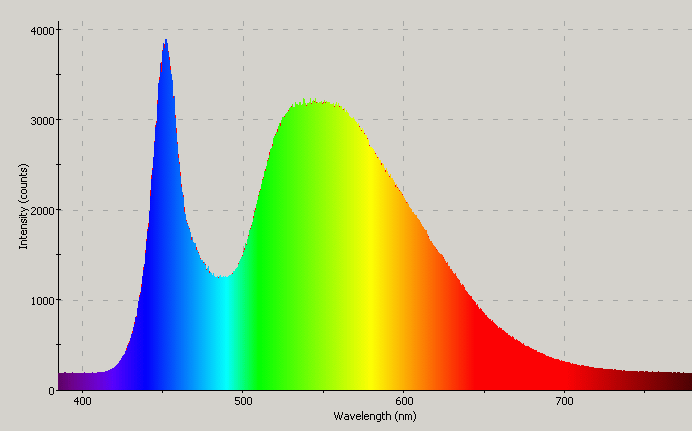
- Wrong. White LEDs are often created by coating a blue LED (~450 nm) with phosphor, so peak wavelength still matters.
Peak Wavelength in White LEDs
White LEDs work differently:
- A blue LED emits light at ~450 nm.
- A phosphor coating converts some of that blue light into yellow.
- Together, they create white light.
Here, the peak wavelength of the blue LED directly affects the color temperature (cool white vs. warm white).
Choosing the Right Peak Wavelength LED
When selecting LEDs for a project, consider:
- Target Application (e.g., display, horticulture, medical).
- Required Color Accuracy (does it need ±1 nm precision or is ±10 nm acceptable?).
- Environmental Factors (temperature shifts can alter output).
- Manufacturer Datasheets (always check wavelength bin ranges).
Future of LED Peak Wavelength Control
As LED technology advances:
- Tighter binning ensures consistent colors across large batches.
- Quantum dot LEDs (QLEDs) allow even finer control over wavelength.
- Micro-LEDs in displays rely on precise peak wavelength to achieve lifelike visuals.
- CIE Colorimetry Standards – International Commission on Illumination
- OSRAM LED Technology – LED manufacturing insights
Conclusion
The peak wavelength secret of LED lighting color is the hidden science that explains why LEDs look the way they do, how industries use them for precision, and why choosing the right wavelength matters for performance.
From horticulture and healthcare to displays and traffic lights, peak wavelength defines the color, efficiency, and reliability of LED technology.
As technology advances, we’ll see even more precise wavelength control, unlocking new possibilities in lighting, displays, and beyond.