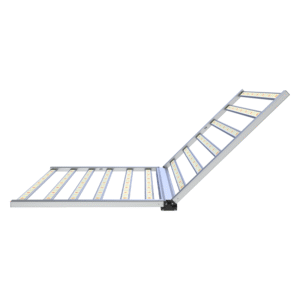


1300W LED Grow Light Description China Manufacturer
Elevate your indoor cultivation with the SPACELUX 1300W LED Grow Light. Engineered for commercial-grade performance and exceptional harvests, this light integrates cutting-edge technology with unparalleled reliability. It is the ultimate solution for serious growers aiming to maximize yield and quality in any growth environment.
1300W LED Grow Light Specification
| Model | SPL-ZP610-1300 |
| Power | 1300W |
| LedChips | 3000K+5000K+660nm+730nm+395nm+450nm |
| PPF | 3770µmol/s |
| EFF | 2.9µmol/J |
| Input Voltage | AC180V 220V 240V 277V |
| Input current at 100% | 7.22A 5.90A 5.42A 4.69A |
| Input power at 100%: | 1300W |
| Input Voltage | AC180V -277V |
| Input current | 4.69-7.22A |
| Lifetime | 50,000hrs |
| Warranty | 3 years |
| Beam angle | 120° |
| Frequency | 50-60Hz |
| WorkTemp | -20~+40°C |
| PF | ≥0.95 |
1300W LED Grow Light Image

The effect of light quality on plants
395nm violet light
1. Purple light is the central area of plant phototaxis and can affect plant morphogenesis.
2. Purple light inhibits the growth of the trunk and foliar surfaces of plants (inhibits leggy growth).
3. Purple light can stimulate plant cyan pigments, causing plant fruits/petals or leaves to color and improve quality
450nm blue light
1. Blue light has a significant impact on the early stages of plant growth, assisting plants in establishing a well-developed root system.
2 . Blue light inhibits the growth of the plant’s trunk and leaf surface, but increases the sturdiness of the trunk.
3 . Chlorophyll a/b has a strong absorption rate in the blue light region and mainly helps plants synthesize proteins and amino acids
660nm red light
1. Red light is the main force of photosynthesis, and under certain blue light conditions, the efficiency of photosynthesis is at its best.
2. Red light mainly helps plants produce carbohydrates, which makes the plant grow taller and the leaf surface larger.
3. In weak light environments, red light has the highest efficiency in promoting photosynthesis in plants.
730nm infrared light
1. Through infrared light irradiation, the photosensitive pigment Pfr is converted into Pr, thereby inhibiting plant flowering and controlling the flowering cycle:
2 . Combined with 660nm, dual-light gain benefits can be achieved, which is much higher than the photosynthesis efficiency of 660nm alone.
The effect of light quality on plants
SPECTRUM


Distance From Canopy:12″(6*4FT)

Distance From Canopy:18″(6*4FT)

Distance From Canopy:24″(6*4FT)