Overview of Electronic Component Packaging Technology
Electronic component packaging technology is a crucial link in the electronics industry, as it determines the performance, reliability, cost and application scope of electronic components.
Common electronic component packaging methods include through-hole packaging and surface mount packaging.
Through-hole packaging, such as DIP (Dual In-line Package), has component pins passing through the printed circuit board (PCB) and soldered to the other side of the PCB.
For surface mount packaging, such as SMD, components are directly soldered onto the PCB surface. Different packaging methods are suitable for different application scenarios and requirements.
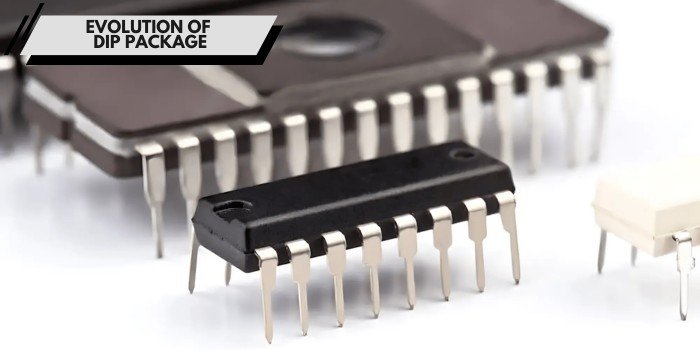
What is DIP packaging? Characteristics of DIP packaging structure
DIP (Dual In-line Package), or dual in-line package, is a through-hole packaging technology. The pins of the components in DIP packaging are arranged in two parallel rows.
After the pins are inserted into the through holes on the PCB, they are soldered.
The structure of DIP packaging is relatively simple, with thick pins, which is convenient for manual soldering and plugging and unplugging.
Its packaging body is usually made of plastic or ceramic and contains electronic component chips inside.
The characteristics and advantages of DIP LED
The feature of DIP LEDs lies in their thick and sturdy pins, which are easy to solder and suitable for manual assembly and maintenance. Its advantages include:
Easy to manually solder and maintain: For some small-scale production or situations that require manual maintenance, the advantages of DIP LEDs are obvious.
Good heat dissipation performance: The larger package volume is conducive to heat dissipation, especially suitable for high-power LEDs.
High mechanical strength: Thick and sturdy pins, strong anti-vibration ability.
The circuit design is simple: easy to integrate with other through-hole components.
Application scenarios and cases of DIP LED
DIP LEDs are mainly applied in situations where the requirements for volume and cost are not high, such as:
Indicator lights: Indicator lights on various electrical devices, such as power indicator lights, status indicator lights, etc.
Backlight: Backlight for some small electronic devices, such as instrument panels, buttons, etc.
Special-purpose lighting: Some special lighting applications require manual assembly or maintenance.
Educational and experimental applications: In electronic teaching and experiments, DIP LEDs are widely used due to their ease of operation.
A comparison between DIP LED and other packaging methods, such as SMD
Compared with SMD LEDs, DIP LEDs are larger, more expensive, and have lower efficiency in automated production.
SMD LEDs are more suitable for high-density circuit board design and are more applicable to large-scale production.
However, DIP LEDs may have advantages in terms of heat dissipation and mechanical strength, especially in high-power applications.
Installation and soldering of DIP LEDs
The installation of DIP LEDs is relatively simple. Just insert the pins into the through holes on the PCB and then perform soldering.
When soldering by hand, soldering irons can be used, while automated production lines adopt processes such as wave soldering or reflow soldering.
The current situation and future development trends of DIP LED technology
Although SMD LEDs have become the mainstream packaging method in the LED lighting field, DIP LEDs still have their place in some specific applications.
In the future, DIP LEDs may continue to exist in some fields with high requirements for reliability, heat dissipation and maintainability, but their market share is expected to continue to decline.
More advanced packaging technologies, such as COB and CSP, will become the future development trend.
Summary: The position and Role of DIP packaging technology in LED lighting
The historical position of DIP packaging technology in the LED lighting field cannot be ignored, especially in the early stage of LED technology development, as it laid the foundation for the popularization and application of LED.
Although surface mount technologies such as SMD are dominant nowadays, DIP LEDs still play a role in some specific fields due to their unique advantages.
In the future, DIP packaging technology will coexist with other packaging technologies to jointly meet the demands of different application scenarios.