Introduction: What is LED lighting and Its Importance
LED lighting technology, as an energy-saving, environmentally friendly and long-lasting light source, has been widely applied in various fields.
Compared with traditional lighting methods, LED lighting has a higher energy conversion efficiency, a longer service life, and a wider range of color temperature options.
Correlated color temperature (CCT) is an important parameter in LED lighting technology, as it directly affects the color and atmosphere of the light.
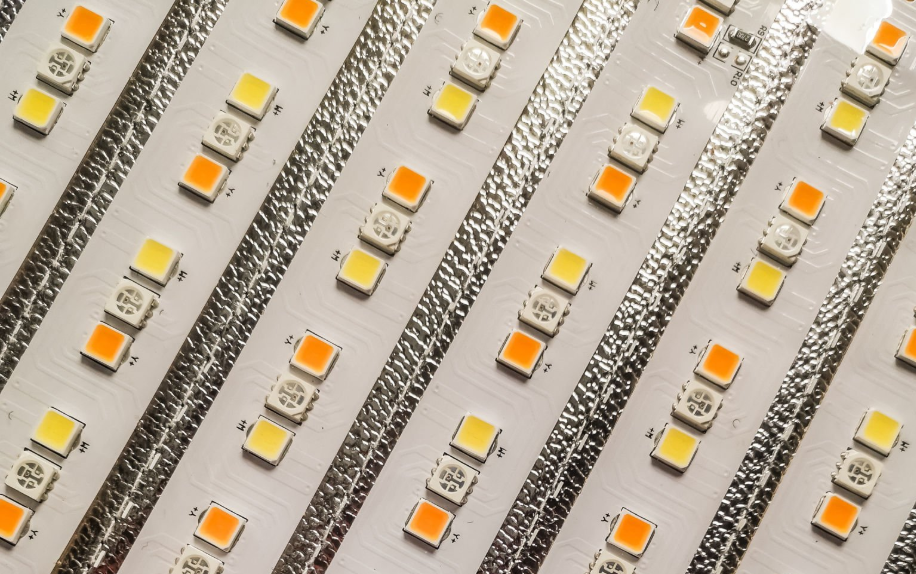
What is correlated color Temperature (CCT)?
Correlated color temperature (CCT) refers to the temperature at which the color of a light source matches the color of the light radiated by a black body at a specific temperature.
A blackbody is an idealized object that can absorb all incident light and emit light of a specific wavelength when heated.
The measurement unit of CCT: Kelvin (K)
Kelvin (K) is the unit of thermodynamic temperature and also the measurement unit of CCT.
The lower the value, the warmer the tone (yellowish) of the light.
The higher the value, the cooler the light tone (bluer).
The luminous efficacy and application scenarios of different CCT values
Light with different CCT values will create different atmospheres and be suitable for different application scenarios.
For instance, warm white light (2700K-3000K) creates a cozy and comfortable atmosphere, making it suitable for home environments such as bedrooms and living rooms.
Cold white light (above 5000K) is bright and cold, and is often used in commercial places or Spaces that need to emphasize modernity.
Natural white light (3500K-4100K) is close to natural light and is suitable for places such as offices and schools where concentration is required.
Factors Affecting CCT in LED Lighting
The CCT value of LED lighting products is influenced by multiple factors, including the material of the LED chip, the type and proportion of phosphor, etc.
Different combinations of LED chips and phosphors will produce different spectral distributions, thereby affecting the final CCT value.
How to choose the appropriate CCT value
Choosing the appropriate CCT value requires considering the application scenario and personal preferences.
For instance, warm white light can be chosen for the bedroom to create a cozy and comfortable atmosphere.
The office can choose natural white light to improve work efficiency.
The operating room, on the other hand, needs to choose high-brightness pure white light or cold white light.
The relationship between CCT and color rendering index (CRI)
The Color Rendering Index (CRI) refers to the degree to which a light source restores the color of an object.
Light sources with high CRI values can more realistically reproduce the colors of objects.
Although CCT is related to CRI, not all light sources with high CCT values have high CRI values.
When choosing a light source, both the CCT and CRI values need to be considered simultaneously.
Conclusion: The significant role of CCT in LED lighting
Correlated color temperature (CCT) is an important parameter in LED lighting technology.
It directly affects the color and atmosphere of light, thereby influencing people’s visual perception and emotions.
In the design and application of LED lighting, choosing the appropriate CCT value is of vital importance.
In the future, with the continuous development of LED technology, the selection range of CCT will become more extensive and better meet people’s demands for lighting quality.